

If you’ve ever walked into a kitchen and immediately felt something was off — a strange gap between the top of the cabinets and the ceiling, collecting dust and looking oddly unfinished — you’re not alone. That awkward dead space is one of the most common complaints homeowners have, and the good news is that adding toppers to kitchen cabinets is one of the most affordable, transformative upgrades you can make without a full remodel.
Whether you’re after a sleek, built-in look or extra storage you desperately need, adding toppers to kitchen cabinets opens up a world of design possibilities. From extending kitchen cabinets to ceiling with matching cabinet boxes to decorative crown molding and glass-front displays, this guide walks you through everything — ideas, materials, costs, and step-by-step DIY instructions.
Let’s fix that awkward gap once and for all.
Why That Space Above Your Cabinets Is Costing You More Than You Think
Most standard kitchen cabinets sit at around 30 to 42 inches tall. In kitchens with 9- or 10-foot ceilings, that leaves a substantial space above kitchen cabinets — often 12 to 18 inches of completely wasted real estate. Visually, it makes the kitchen feel choppy and unfinished. Practically, it becomes a magnet for grease, dust, and the random items no one knows what to do with.
From a design standpoint, kitchen cabinets to ceiling create a cleaner, more luxurious aesthetic. According to a 2023 Houzz Kitchen Trends Study, kitchens with full-height cabinetry are among the top-requested features in renovation projects, cited by over 58% of homeowners. And beyond aesthetics, filling that gap adds meaningful storage — which in the average American kitchen is always in short supply.
There’s also the resale value factor. Realtors consistently note that kitchens are the number-one room buyers evaluate, and tall kitchen cabinets to ceiling signal a thoughtfully designed, high-end space.
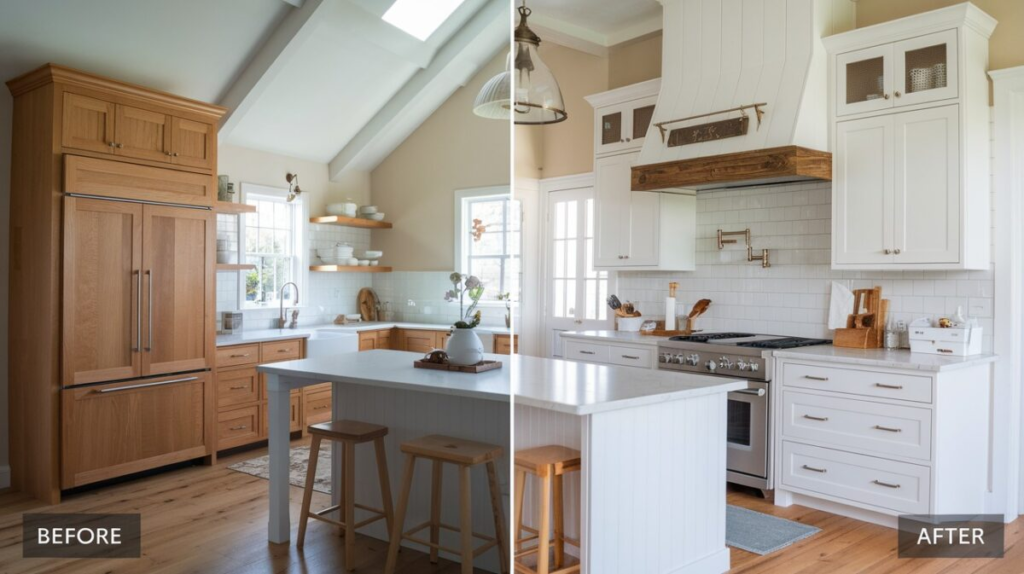
Before and after: A kitchen transformed by extending cabinets to ceiling with matching topper boxes and crown molding — turning a dusty gap into a polished, built-in look.
What Are Cabinet Toppers and Why Do They Matter
Kitchen cabinet toppers are essentially extension boxes, decorative panels, or smaller cabinet units added on top of existing upper cabinets to bridge the gap between the cabinets and the ceiling. They can be purely decorative, purely functional, or both. The term cabinet extension is often used interchangeably — their primary job is to visually and physically extend your existing cabinetry upward.
Whether you call them cabinet extenders, cabinet extension to ceiling pieces, or simply boxes above kitchen cabinets, they all solve the same problem. Here’s what makes them so compelling:
- Cost-effective: A full kitchen cabinet replacement can run $15,000–$50,000. Cabinet toppers typically cost $200–$2,000 depending on materials and method.
- DIY-friendly: Most extending cabinets to ceiling DIY projects require basic carpentry tools and a weekend.
- Customizable: Match your existing cabinets, choose a contrasting finish, add glass doors, or go open for a cubbies above kitchen cabinets look.
- Impactful: The before-and-after difference is dramatic. Extending kitchen cabinets to ceiling before and after photos consistently show jaw-dropping transformations.
Types of Cabinet Toppers: Finding the Right Fit for Your Kitchen
Open Box Toppers (Cubbies Above Kitchen Cabinets)
One of the most popular approaches is building or buying simple open boxes that sit on top of existing cabinets and fill the gap to the ceiling. These cubbies above kitchen cabinets can hold baskets, decorative items, rarely used appliances, or seasonal kitchenware. They’re particularly popular in farmhouse and transitional kitchens where the open, airy aesthetic complements the overall design.
Matching Cabinet Boxes with Doors
For the most seamless, built-in appearance, adding cabinets above kitchen cabinets using boxes that match the existing cabinet style — same door profile, same finish — is the gold standard. This approach creates the illusion that the cabinets were always ceiling-height. If you have shaker kitchen cabinets to ceiling, adding matching shaker-profile topper boxes creates a cohesive, custom look that’s incredibly hard to distinguish from purpose-built tall cabinetry.
Glass-Front Cabinet Toppers
Adding glass cabinets above kitchen cabinets is an elegant option that lightens the visual weight of floor-to-ceiling cabinetry. The glass panels allow you to display nice dishware or glassware while still closing off the space. Interior lighting inside the glass cabinets elevates the effect dramatically.
Crown Molding Extensions
Not every kitchen needs full cabinet boxes at the top. Sometimes a well-designed crown molding build-up is enough to fill space above cabinets gracefully. A thick, layered crown molding profile can visually connect the cabinet tops to the ceiling and add an expensive, architectural look without adding any storage boxes at all.
Faux Cabinet Fronts (Decorative Panels)
For those who want the look without the full build-out, kitchen cabinet extenders in the form of flat panel faux fronts can be applied to the face of the space above the cabinets. They create the illusion of taller cabinets without the structural work involved in building full boxes.
How to Extend Kitchen Cabinets to the Ceiling: A Step-by-Step DIY Guide
Ready to tackle this yourself? Here’s a comprehensive walkthrough of how to extend cabinets to ceiling using the most popular method — building and installing matching cabinet boxes.
STEP 1: Measure the Gap Accurately
Measure the gap above kitchen cabinets in multiple places along each cabinet run — ceilings are rarely perfectly level. Note minimum and maximum heights and decide whether you’ll trim boxes to fit or use scribe molding. Tools needed: tape measure, level, pencil.
STEP 2: Choose Your Materials
For matching existing wood cabinets, use the same wood species or MDF. For a budget-friendly DIY extend kitchen cabinets to ceiling project, paint-grade MDF or birch plywood are the most economical options. For higher-end results, use solid wood or pre-made cabinet boxes in your cabinet’s style.
STEP 3: Build or Buy the Topper Boxes
Option A: Buy pre-made upper cabinet boxes at Home Depot, IKEA, or a cabinet wholesaler in standard widths (9″–24″). Option B: Build custom boxes from ¾” plywood for perfect sizing. Assemble with pocket screws and wood glue, then sand, prime, and paint before installation.
STEP 4: Add Face Frames (If Applicable)
If your existing cabinets are framed (most American-style cabinets are), add matching face frames to your topper boxes. Cut 1½” wide strips of the same wood, assemble to match the existing face frame style, and attach with glue and brad nails.
STEP 5: Install the Topper Boxes
Mark wall studs above existing cabinets. Have a helper hold each box in position, check for level, and drive 3″ screws through the back into wall studs. Also screw down through the bottom of the topper into the top of the existing cabinet for added stability. Fill ceiling gaps with scribe molding or caulk.
STEP 6: Install Crown Molding
Crown molding is the finishing touch that makes kitchen cabinets extend to ceiling look professionally done. Run molding along the top of topper boxes where they meet the ceiling. Cut 45-degree miter joints carefully, glue and nail into place, then fill nail holes and caulk before painting.
STEP 7: Paint and Finish
Caulk all seams between topper boxes and existing cabinets, between boxes, and between the topper and ceiling. Sand lightly, prime bare wood, and apply two coats of your cabinet paint color. The result should look like the cabinets were always this tall.
How to Make Kitchen Cabinets Look Taller Without Full Toppers
Not every kitchen needs full cabinet box extensions. Here are some clever alternatives for how to make kitchen cabinets look taller with less work.
Paint the Ceiling the Same Color as the Cabinets
This trick visually dissolves the gap between cabinet tops and ceiling, making the empty space above kitchen cabinets disappear. It works particularly well with white or light-colored cabinetry against a white ceiling.
Use Vertical Lines and Tall Hardware
Long, vertical bar pulls on cabinet doors draw the eye upward and create the impression of height. Combined with crown molding that reaches the ceiling, this can significantly improve how making kitchen cabinets taller looks without any structural changes.
Install Above-Cabinet Lighting
LED strip lights above the cabinets, bouncing light off the ceiling, make the space above kitchen cabinets ideas more intentional and designed — even without physical toppers. Lighting changes perception dramatically.
Style Open Cabinet Tops Intentionally
If you have open top kitchen cabinets, styling the space above with uniform baskets, matching pottery, or a curated collection of cookbooks turns the gap into a design feature rather than an eyesore.
Adding Cabinets to an Existing Kitchen: What to Know Before You Start
Adding upper cabinets to existing kitchen setups requires planning beyond just the topper boxes themselves. Here’s what to consider before you pick up a drill.
Check Your Ceiling Height and Type
Standard 8-foot ceilings with 30″ upper cabinets leave only about 18″ of clearance — enough for one shallow topper box. Nine-foot ceilings offer more flexibility. Drop ceiling above kitchen cabinets (suspended ceilings) require special consideration, as you may need to remove tiles to access framing for proper attachment.
Match the Cabinet Style Exactly
The most common mistake in adding kitchen cabinets to existing cabinets is a mismatch in door style, wood grain direction, or paint sheen. Before ordering or building toppers, take a door from an existing cabinet to your paint store for an exact spectrophotometer color match.
Consider Weight and Wall Structure
How to add cabinets on top of existing cabinets safely depends on the wall structure behind them. Upper cabinets must attach to wall studs. If your existing cabinets are mounted with only drywall anchors, add proper stud-screwed mounting before adding any additional weight.
Budget Realistically
Here’s a general cost breakdown for kitchen cabinet extension projects:
| Method | DIY Cost | Professional Cost |
| Open cubbies (basic) | $100–$400 | $400–$900 |
| Matching cabinet boxes | $300–$800 | $800–$2,500 |
| Crown molding only | $50–$200 | $300–$700 |
| Full ceiling-height rebuild | $500–$2,000 | $3,000–$8,000 |
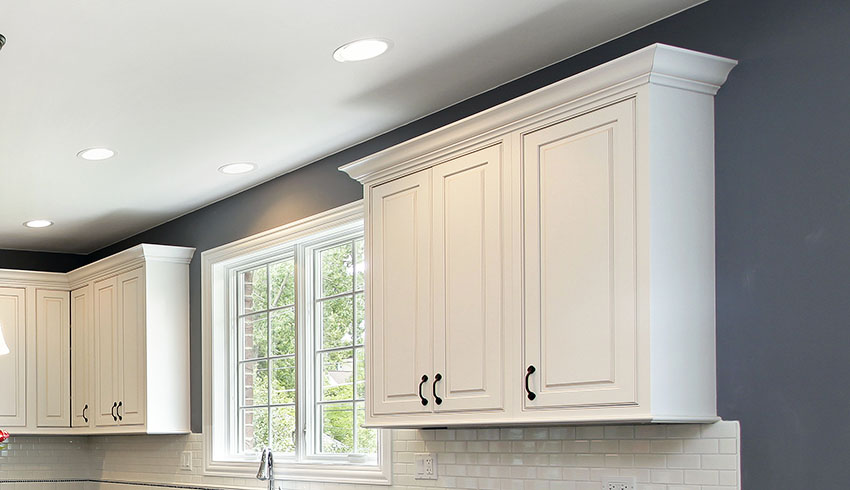
Step-by-step installation of cabinet topper boxes above existing upper cabinets — from measuring the gap to nailing crown molding for a seamless, ceiling-height finish.
Extending Kitchen Cabinets to Ceiling: Before and After Inspiration
Nothing sells the idea better than real transformations. Extending kitchen cabinets to ceiling before and after projects consistently show kitchens that feel 30–40% larger, have dramatically reduced visual clutter, and achieve a high-end, custom look at a fraction of the cost of new cabinetry.
Popular design combinations include:
- White kitchen cabinets to ceiling with simple flat-panel or Shaker topper boxes and a white painted ceiling — clean, timeless, and universally appealing.
- Shaker cabinets to ceiling in navy or forest green — bold, dramatic, and on-trend for contemporary kitchens.
- Two-tone kitchens where lower cabinets are a color and upper wall cabinets to ceiling are white — maintaining visual lightness while adding personality below.
- Kitchen units to ceiling paired with integrated handles for a sleek, handleless modern aesthetic.
Common Mistakes to Avoid When Adding Toppers to Kitchen Cabinets
Ignoring the Ceiling’s Levelness
Few ceilings are perfectly level. Measure in multiple spots and plan for scribing or shimming. Installing topper boxes without accounting for this leads to visible gaps that are very difficult to fix after the fact.
Underestimating the Finish Work
The carpentry is often the easiest part. The caulking, filling, priming, and painting that makes the topper boxes look seamless with the existing cabinets takes patience. Rushing this stage is the most common reason DIY results look amateur.
Forgetting About Ventilation and Lighting
If you’re enclosing the space above the kitchen cupboards to ceiling, consider whether you’re blocking ventilation or existing lighting. Plan around exhaust fans, soffit vents, or recessed lights before finalizing your cabinet extension design.
Going Too Deep
Standard upper cabinets are 12–13 inches deep. Topper boxes should match this depth exactly — deeper boxes look awkward and can interfere with the function of the cabinets below.
Frequently Asked Questions
What are cabinet toppers for kitchen cabinets?
Cabinet toppers are extensions — either decorative panels, open boxes, or smaller cabinet units — added on top of existing upper kitchen cabinets to fill the gap between cabinet tops and the ceiling. They improve aesthetics, add storage, and create a built-in, floor-to-ceiling look.
Is extending kitchen cabinets to ceiling a DIY project?
Yes, extending cabinets to ceiling DIY is very achievable for someone with basic carpentry skills and tools. The most common approach — building simple plywood boxes, installing them on top of existing cabinets, and adding crown molding — typically takes a weekend for an average kitchen.
How much does it cost to extend kitchen cabinets to ceiling?
A DIY approach for extend cabinets to ceiling can run as little as $100–$400 for open cubbies. Matching cabinet box extensions with doors typically cost $300–$800 DIY or $800–$2,500 professionally installed, depending on kitchen size and materials.
Can you add cabinets on top of existing cabinets without removing them?
Yes. Most adding cabinets on top of existing cabinets projects are done without removing the existing cabinetry. The topper boxes are secured to wall studs and screwed down into the top of the existing cabinets for stability.
What is the gap above kitchen cabinets called, and how do I fill it?
The space between cabinet tops and ceiling is sometimes called the ‘soffit gap’ or simply the gap above kitchen cabinets. The best ways to fill space above cabinets include adding topper boxes, building crown molding build-ups, installing open cubbies with baskets, or using faux panel fronts.
Do kitchen cabinets to ceiling make a kitchen look bigger?
Yes — significantly. Kitchen cabinets to ceiling draw the eye upward, creating a strong vertical line that makes the room feel taller and larger. This is a well-established design principle used in high-end kitchens to maximize perceived volume, especially in smaller or galley kitchens.
What is the best way to match new topper boxes to existing cabinets?
The key to seamless cabinet extension matching is: (1) use the same door profile (e.g., matching shaker cabinets to ceiling toppers), (2) get an exact paint color match via spectrophotometer at a paint store, and (3) match the sheen level of your existing paint exactly.
Can I add glass-front toppers above solid-door cabinets?
Absolutely. Adding glass cabinets above kitchen cabinets is a popular design choice that lightens the visual weight of full-height cabinetry. It works especially well when toppers display attractive dishware and interior lights illuminate the contents.
How do I handle crown molding when extending cabinets to ceiling?
Crown molding is installed at the junction between the top of the topper boxes and the ceiling. How to extend kitchen cabinets to the ceiling with crown molding involves cutting 45-degree miter joints at corners, securing with construction adhesive and finish nails, then caulking and painting for a seamless finish.
Are there alternatives to building boxes for adding height to kitchen cabinets?
Yes. For a simpler approach to adding height to kitchen cabinets, consider: a thick layered crown molding build-up from cabinet tops to ceiling, a painted flat board spanning the gap, or pre-made kitchen cabinet extenders specifically designed to add a decorative finished extension to the top of standard upper cabinets.
Conclusion
The gap above kitchen cabinets is one of those things you stop noticing after a while — until you see a kitchen without it, and suddenly you can’t unsee yours. Adding toppers to kitchen cabinets is a genuinely transformative project that delivers dramatic visual results at a fraction of the cost of a full kitchen remodel.
Whether you go full custom with matching cabinet extensions to ceiling, keep it simple with open cubbies above kitchen cabinets, or opt for the elegance of glass-front toppers, the result is a kitchen that looks intentional, complete, and beautifully designed.
The before-and-after impact is hard to overstate. Extending kitchen cabinets to ceiling before and after comparisons show kitchens that look bigger, cleaner, and significantly more expensive — all from one focused DIY weekend project. Measure your gap, pick your approach, and get building. Your kitchen deserves to go all the way to the top.