

There’s something almost magnetic about a dark oak dining table. The moment one lands in a room, everything around it seems to arrange itself with purpose — chairs pull in, lighting softens, and the space suddenly feels less like a corridor between the kitchen and the lounge and more like a place where people actually want to linger. If you’ve been circling the idea of investing in one, you’re not alone. Demand for dark wood dining tables has climbed steadily over the past decade, and for very good reason.
Oak is one of the most enduring hardwoods used in furniture making. When it’s finished in a deep, rich tone — the kind that lands somewhere between warm walnut and espresso — it delivers a dark brown dining table effect that feels simultaneously classic and contemporary. It suits farmhouse kitchens, open-plan apartments, and formal dining rooms with equal ease. Whether you’re shopping for your first grown-up dining set or replacing a tired piece that’s been doing the rounds for twenty years, this guide will walk you through everything you need to know.
We’ll cover the different styles of dark oak dining tables, how to choose the right size and shape for your space, which finishes and leg designs work best, and what to actually look for when you’re standing in a showroom or scrolling through product pages at midnight. By the end, you’ll know exactly what to buy — and why.
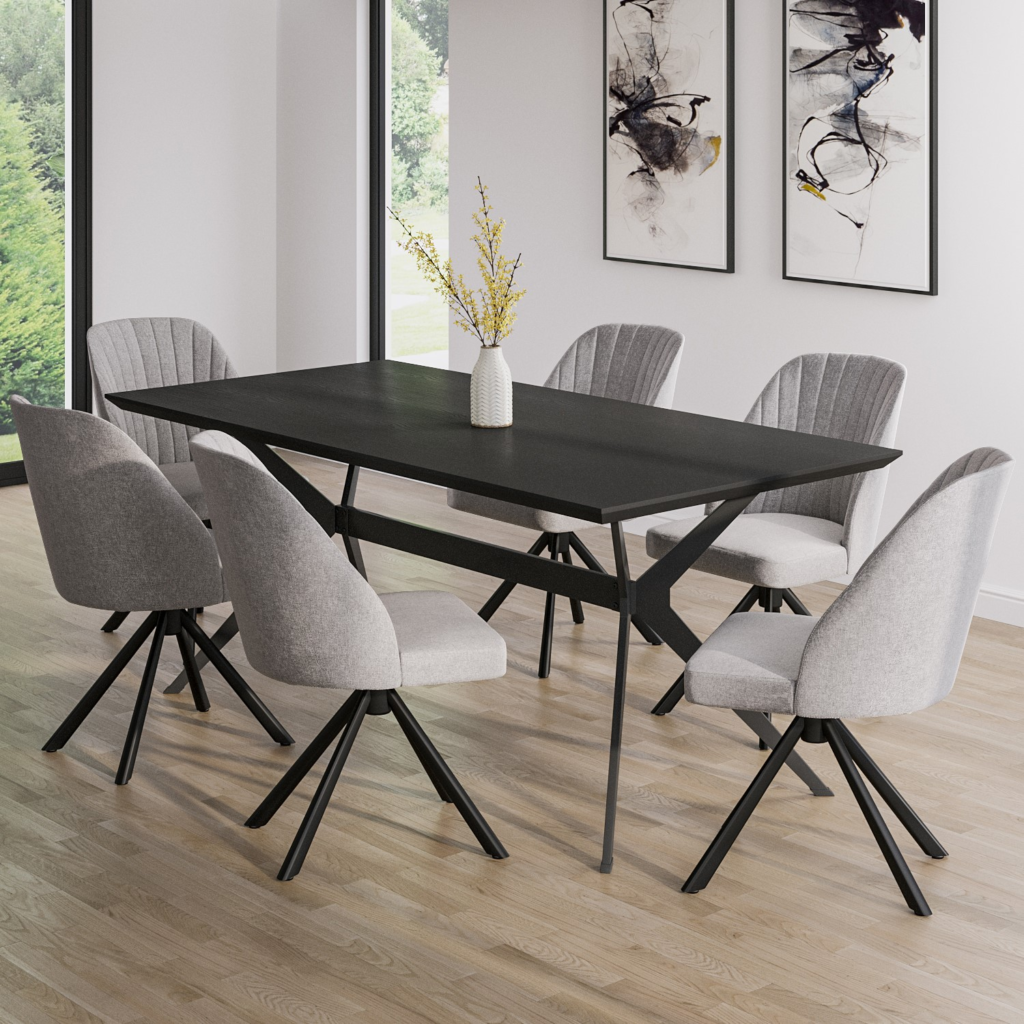
A classic dark oak dining table styled with upholstered chairs — the combination of warm wood tones and clean lines is timeless.
Why a Dark Oak Dining Table Is Worth the Investment
Furniture trends come and go, but certain materials seem to outlast every wave of minimalism, maximalism, and Scandi-inspired neutrals that washes through the interior design world. Solid oak is one of them. A well-made dark wood dining room table is not a disposable purchase — it’s a piece that, if cared for properly, can outlive its owner. Oak’s open grain structure gives it both strength and a natural resistance to warping, which is exactly what you want from a surface that’s going to handle hot casserole dishes, homework sessions, and dinner party spills over the coming decades.
The appeal of a dark wooden dining table specifically lies in its versatility. Lighter woods — ash, maple, beech — can look stunning in the right setting, but they’re more demanding in terms of coordination. A dark wooden table works as a natural anchor. It provides visual weight that stops a room from feeling unfinished, while the warmth of the wood grain prevents it from feeling cold or industrial the way an all-black table might.
The Colour Psychology Behind Dark Wood
Interior designers frequently cite dark brown wood as one of the most psychologically comforting tones in the home. Brown sits in the family of earth tones — it signals stability, warmth, and rootedness. A brown dining table doesn’t demand attention the way a brightly coloured piece might, but it earns it. Guests notice it, compliment it, and feel at ease around it. That’s a difficult combination to achieve in furniture design.
Research in environmental psychology consistently shows that rooms with warm, natural materials — particularly wood — produce lower stress responses in occupants compared to rooms furnished primarily with synthetic materials or stark whites. You’re not just buying a dark brown table; you’re investing in the mood of your home.
Styles of Dark Oak Dining Tables: From Rustic to Modern
One of the most common misconceptions about dark oak furniture is that it only suits traditional or country-style interiors. In reality, the style of a table is determined far more by its silhouette and leg design than by the wood colour alone. Let’s look at the main style categories.
Rustic Dark Oak Dining Tables
The rustic dark oak dining table is the original and arguably still the best. Characterised by chunky legs, visible grain patterns, and sometimes a distressed or hand-scraped finish, rustic pieces suit farmhouse kitchens, country cottages, and any space where character matters more than precision. A rustic dark wood dining table typically pairs beautifully with mismatched chairs, linen upholstery, and aged metal hardware. It’s the kind of piece that looks better with every scratch it earns.
Modern Dark Wood Dining Tables
If your interiors lean contemporary, don’t dismiss the modern dark wood dining table. Designers have spent the past two decades refining how dark oak can be used in clean-lined, high-specification environments. The formula usually involves thinner table tops, tapered or hairpin legs, and a finish that’s smooth rather than textured. A dark wood dining set in this vein can sit alongside concrete floors, exposed brick, and pendant lighting without looking out of place.
Oak and Black Dining Tables
The pairing of warm wood with matte black metal has become one of the defining aesthetic moves of the 2010s and 2020s. An oak and black dining table, where the table top is in dark oak and the legs or frame are powder-coated black, delivers a sophisticated industrial look. You’ll also see this marketed as a black and oak dining table or a dark dining table with contrast legs. The oak dining table with black legs variant is especially popular right now — it gives you the warmth of wood at eye level and the visual slimming effect of black metal below.
Style Comparison at a Glance
| 🌾 Rustic | ⬛ Oak + Black | 🔵 Modern | 🔄 Extendable |
| Chunky legs, visible grain, distressed finish. Best for: farmhouse, cottage. | Warm oak top, black metal legs. Best for: loft, open-plan, contemporary. | Smooth finish, tapered legs. Best for: Scandi, minimalist, urban. | Hidden leaf mechanism. Best for: smaller homes, flexible households. |
Choosing the Right Shape for Your Space
Shape is one of the most underrated decisions in the dining table buying process. Most people default to rectangular because that’s what they grew up with, but the right shape for your room might be something else entirely.
Rectangular Dark Oak Dining Tables
The most common format, and for good reason. A rectangular dark wood dining table fits most room layouts efficiently, seats the maximum number of people for its footprint, and creates a natural head-of-table dynamic for family dinners. For a dark wood dining set in a dedicated dining room, rectangular is usually the practical default.
Round Dark Oak Dining Tables
A dark wood round dining table — or a round dark oak dining table — is worth serious consideration if your dining space is square or on the smaller side. Round tables encourage conversation in a way that rectangular ones don’t; nobody is at the end of the table, and everyone is equally close to the centre. A dark oak round dining table also tends to look more elegant in period properties and formal dining rooms. The lack of sharp corners makes it a practical choice if you have young children, too. A dark round dining table is one of those furniture choices that consistently surprises people — they buy it for practical reasons and end up loving it for aesthetic ones.
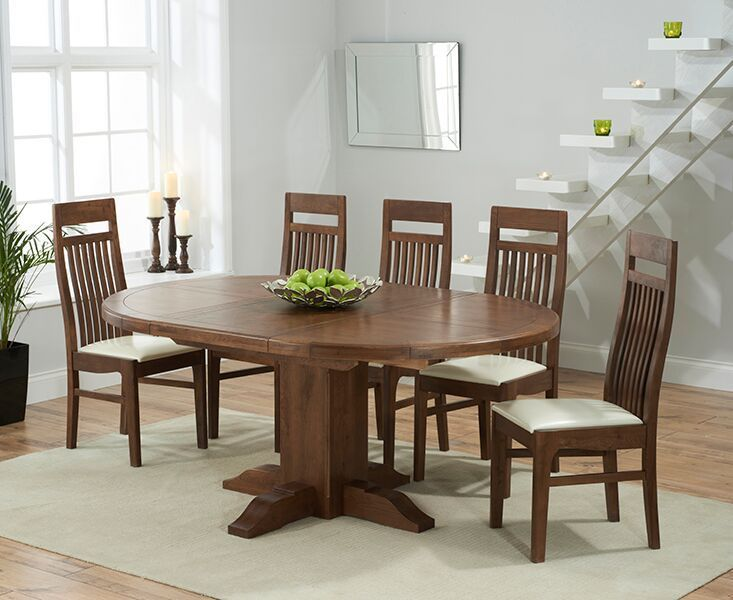
A round dark oak dining table creates an intimate, conversation-friendly atmosphere — ideal for smaller or square dining rooms.
Small Dark Wood Dining Tables
For apartments, kitchen diners, and compact spaces, a small dark wood dining table is a practical necessity. The good news is that smaller formats have improved dramatically in design quality. You don’t have to sacrifice aesthetics for footprint. Look for a dark oak table in the 90–120cm range for two to four people, and pair it with stackable chairs or a bench to keep the space flexible.
The Case for an Extendable Dark Oak Dining Table
If there’s one feature that divides dining table buyers, it’s the extendable mechanism. Some people find butterfly leaves and drawer extensions mildly terrifying; others swear by them. Let’s clear up the misconceptions.
How Dark Oak Extendable Dining Tables Work
A dark oak extendable dining table — sometimes referred to as a dark oak extending dining table — includes a concealed mechanism that allows the table to increase in length by adding one or more leaves. The most common types are the butterfly mechanism (the leaf folds out from inside the table when you pull the two halves apart) and the central insert (a separate leaf is stored elsewhere and slots into a gap when needed).
Modern extending tables have improved considerably from the wobbly, mismatched-grain versions of the past. A quality dark oak extendable dining table will have a leaf that’s been cut from the same plank as the main table top, ensuring a seamless grain match when extended. The mechanism itself should require no more than two hands and about fifteen seconds to operate.
Pros & Cons of Extendable Tables
| ✔ PROS of Extendable Tables | ✘ CONS of Extendable Tables |
| • Seats far more guests when needed • Takes up less space day-to-day • Great for smaller homes with occasional entertaining • More flexible than a fixed large table | • Mechanisms can wear over time if low quality • Leaf storage is an extra consideration • Can feel slightly less solid than fixed tables • Often slightly more expensive at equal quality |
Dark Oak Dining Table and Chairs: Getting the Combination Right
A table without chairs is just a flat surface. The combination of dark oak dining table and chairs — or more broadly, dining table and chairs dark wood — is where the real magic (and the real risk) lies. Get it right and your dining room looks intentional and beautiful. Get it wrong and the whole space can feel muddled.
Matching vs. Contrasting Chairs
The instinct to match chairs exactly to a dark wood dining table and chairs set used to be universal. Today, designers largely advise against it. A perfectly matched set can feel overly formal, almost like a hotel breakfast room. Instead, consider:
- Upholstered chairs in a contrasting tone: Cream, grey, or forest green velvet upholstery against a dark dining table creates a luxurious, layered look.
- Metal chairs: Matte black or brushed brass metal chairs work brilliantly alongside an oak dining table black legs design.
- Mismatched styles: Two carver chairs at the heads and four simpler side chairs — a classic move that adds personality.
- A bench: A solid wood or upholstered bench on one side of a brown dining table and chairs arrangement is casual, family-friendly, and saves space.
Dark Brown and Black Combinations
The brown and black dining table aesthetic — or black and brown dining table combinations, including black brown dining table sets — is a popular approach in contemporary interiors. A black oak dining table with black upholstered chairs delivers a cohesive, dramatic look. If you want contrast without going full dark, try a brown dining table with black chairs, or a dark brown dining table paired with lighter natural wood chairs for a tone-on-tone effect.
Dark Wood Dining Sets: Buying as a Package
For those who want a cohesive look without the guesswork, dark wood dining sets — table and chairs sold as a package — are an excellent option. The advantages are significant: grain matching, finish consistency, and design coherence are all handled for you.
What to Look for in a Dark Wood Dining Set
When evaluating brown dining tables and chairs sold as a set, focus on the following features:
| Feature | What to Check | Why It Matters |
| Wood type | Solid oak vs. oak veneer | Solid oak ages better and can be refinished |
| Finish | Oil, lacquer, or wax | Affects maintenance frequency and sheen |
| Joint quality | Mortise and tenon vs. dowels | Determines structural longevity |
| Chair comfort | Seat depth, back angle, padding | You’ll sit on these for hours at a time |
| Grain matching | Check table top panels | Consistent grain = premium finish |
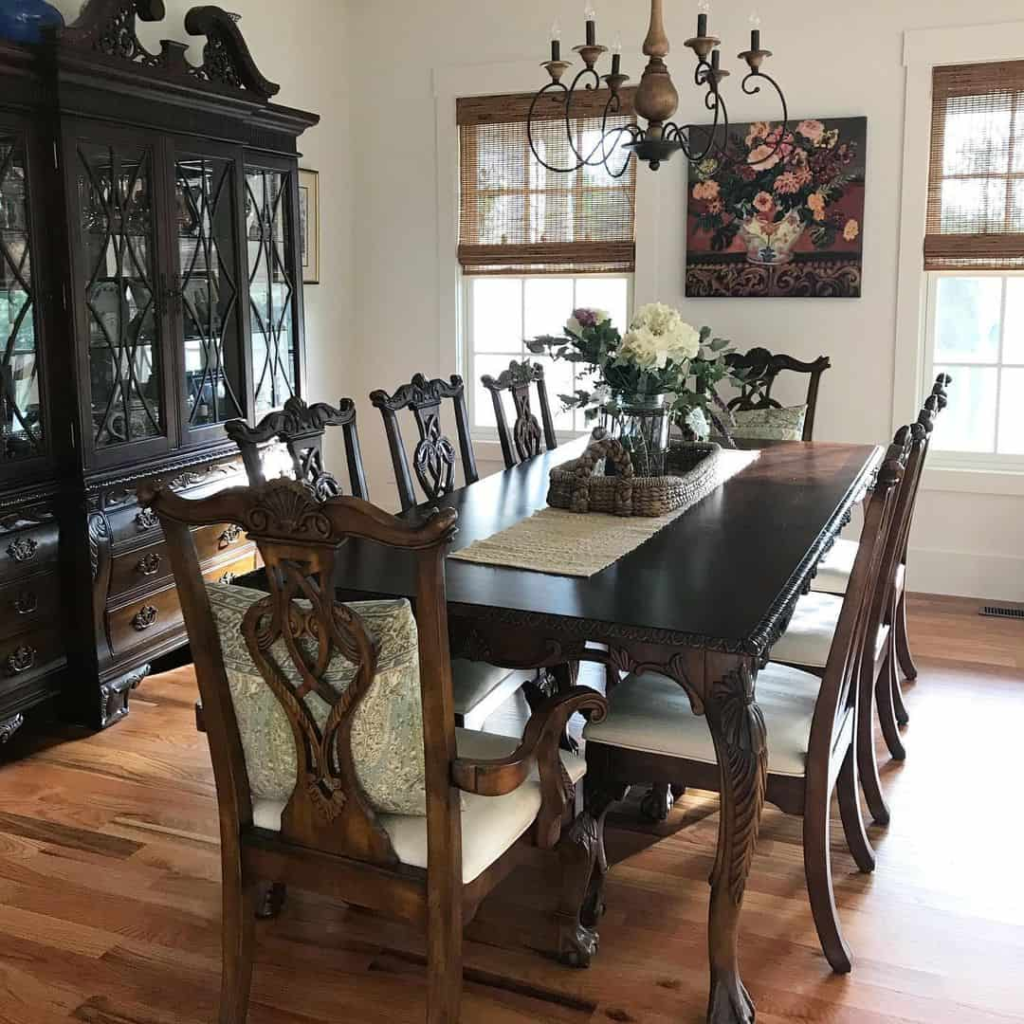
A complete dark wood dining set creates a cohesive, layered look — the chairs, table, and lighting all work together to anchor the space.
Caring for Your Dark Oak Dining Table
A dark oak dining table is an investment that rewards attentive care. The good news is that oak is one of the more forgiving hardwoods — it doesn’t demand constant fussing, but it does benefit from a basic routine.
Day-to-Day Maintenance
Wipe spills immediately with a soft, damp cloth. Never leave water standing on the surface — oak can stain and swell if moisture sits for too long. Use placemats and coasters as a habit rather than an afterthought. For brown tables with an oil finish specifically, a wipe-over with a small amount of furniture oil every six months will keep the grain looking rich and prevent the wood from drying out and dulling.
Dealing with Scratches and Scuffs
Light surface scratches on a dark wooden table can often be disguised with a matching wood crayon or wax filler. For deeper scratches, a professional refinishing job can restore a solid oak table to near-new condition — something you simply can’t do with veneered or laminate pieces. This is one of the quiet arguments for choosing solid wood: the long-term repair and refinishing options are far superior.
Pro Tip: When moving a dark oak table, always lift it rather than dragging it. The legs take the brunt of dragging stress, and even well-made joints will eventually loosen with repeated dragging on hard floors.
Room Styling: Making a Dark Oak Table Work in Any Interior
One concern that crops up regularly is whether a dark brown table will make a room feel smaller or gloomier. It’s a legitimate concern — but one that’s largely managed through the choices around the table rather than the table itself.
Lighting Is Everything
A dark oak dining table paired with poor lighting will indeed feel heavy and oppressive. But the same table under a warm, generous pendant light — or ideally, two or three pendants hung in a row — transforms completely. The grain of the wood catches and reflects light in a way that pale surfaces don’t, creating a glow that feels genuinely inviting.
Wall Colours That Work
Contrary to the instinct to go light to counterbalance a dark wood dining table, some of the most successful schemes pair dark tables with deeper wall colours. Forest green, slate blue, terracotta, and even deep charcoal walls can create a cocooning, atmospheric dining space that feels luxurious rather than cramped.
Rugs, Textiles, and Accessories
The space under a dark dining table is an opportunity, not an afterthought. A patterned rug in warm neutrals defines the dining area within an open-plan space. Keep centrepieces simple — a low vase of seasonal flowers, a candlestick or two — so they complement rather than compete with the brown table and chairs arrangement.
“The secret to a successful dark dining room isn’t fighting the darkness — it’s embracing warmth through light, texture, and natural materials.”
Dark Oak vs. Other Dark Wood Dining Tables: A Brief Comparison
Oak isn’t the only wood used to produce rich, dark dining tables. Walnut, mahogany, and engineered dark finishes all have their advocates. Here’s how they stack up.
Oak vs. Walnut
Walnut is naturally darker and more uniform in its colour — it doesn’t need a stain to achieve that deep, chocolatey tone. However, it’s significantly more expensive than oak and can feel slightly cold compared to the warm, open grain of a dark oak table. For most buyers, oak offers a better value proposition with equivalent visual impact when darkened.
Solid Oak vs. Oak Veneer
A solid oak dark wood dining table will last longer, can be refinished multiple times, and generally feels heavier and more substantial. An oak veneer table is lighter, potentially more stable in changing humidity conditions, and usually less expensive. For a dining table that endures significant daily use — solid oak is worth the premium if budget allows.
Frequently Asked Questions
What size dark oak dining table do I need for 6 people?
For six people seated comfortably, look for a dark wood dining table that’s at least 180cm long and 85–90cm wide. If space allows, 200cm gives everyone more elbow room, especially if you’ll be serving dishes family-style in the centre.
Is a dark oak dining table and chairs suitable for small rooms?
Yes — provided you choose the right scale. A small dark wood dining table in the 90–120cm range, paired with slim-profile chairs, can work beautifully in compact spaces. A round format tends to feel less imposing than rectangular in small rooms.
How do I clean and maintain a dark oak dining table?
Use a soft, damp cloth for daily wipes, avoid harsh chemical cleaners, and keep the table away from direct sunlight to prevent uneven fading. Oil-finished dark oak tables should be re-oiled every 6–12 months. Lacquered tables need less frequent treatment but can’t be refinished as easily.
What chairs work best with an oak dining table with black legs?
An oak dining table with black legs pairs best with chairs that echo the black metal — matte black frame chairs, upholstered chairs on black legs, or all-black industrial-style seating. If you want contrast, cream or light grey upholstery on black frames keeps the palette cohesive without being matchy-matchy.
Is a dark oak extendable dining table reliable long-term?
A quality dark oak extendable dining table from a reputable manufacturer should last as long as a fixed table, provided the mechanism is maintained. Avoid low-cost extending tables with thin plastic components in the mechanism — these are the ones that cause problems. At mid-range and above, extending tables are extremely reliable.
Does a dark brown dining table make a room look smaller?
A dark brown dining table can feel heavy in a poorly lit or very small room, but in a well-lit space it actually anchors the room beautifully. If you’re concerned about visual weight, opt for a table with slender legs rather than a solid pedestal base.
What’s the difference between a black oak dining table and a dark oak dining table?
A black oak dining table typically refers to oak finished in a near-black stain, giving it a very dark, almost ebony appearance. A dark oak dining table retains visible wood grain and warmth, sitting in the deep brown to espresso range. The latter tends to be more versatile across different interior styles.
Can I mix a dark wood dining set with lighter furniture in the same room?
Absolutely. A dark wood dining set surrounded by lighter walls, pale rugs, and linen textiles creates a beautifully balanced room. The key is to ensure there are other touches of dark colour in the space — in lamp bases, picture frames, or decorative accessories — so the table doesn’t appear to float in isolation.
Final Thoughts
A dark oak dining table is one of those purchases that tends to mark a shift in how someone approaches their home. It’s rarely a throwaway decision — it’s the kind of piece you spend time choosing and then spend years appreciating. Whether you opt for a clean-lined modern dark wood dining table with black metal legs, a warm and characterful rustic dark oak dining table that tells the story of every meal, or a practical dark oak extending dining table that grows to meet your family, you’re choosing something built to last.
The combination of dark wood dining tables with thoughtful lighting, well-chosen chairs, and confident styling decisions is hard to beat. It’s a formula that has worked in dining rooms for generations because it draws on something fundamental — our instinctive comfort in warm, natural, grounded spaces. Whether it’s a grand dark oak dining table and chairs set for formal occasions or a modest brown dining table for weeknight suppers, the appeal is the same: it makes a room feel complete.
Take your time, measure twice, and don’t compromise on wood quality. The right table is out there — and once you find it, you’ll wonder how the room ever managed without it.