

There is something quietly elegant about sitting down at an oval dining table—no sharp corners cutting into conversation, no awkward jostling for elbow room, just a soft, continuous curve that somehow makes everyone feel equally welcome. If you have spent any time furniture shopping lately, you already know how many choices are waiting for you. But once you discover the oval shape, it is surprisingly hard to settle for anything else.
Whether you are redesigning a compact oval kitchen table nook or anchoring a formal dining room with a large oval dining table, the shape solves problems that rectangular tables cannot. It fits more people, flows better with the natural traffic of a room, and—done right—becomes the most admired piece of furniture you own. This guide walks you through everything: wood species, base styles, sizing, care tips, and the honest trade-offs nobody else tells you about.
Across more than a decade of interior design research and consumer furniture studies, the oval silhouette has held its ground as one of the most practical and visually satisfying shapes in the dining room. A 2022 report by the American Home Furnishings Alliance found that curved-edge tables ranked highest in family satisfaction surveys, partly because they reduce injury risk for young children and partly because they simply look warmer. That combination of safety, sociability, and style is exactly why the oval dining table continues to outsell many of its angular competitors.
Ready to find the one that belongs in your home? Let’s start with the wood.
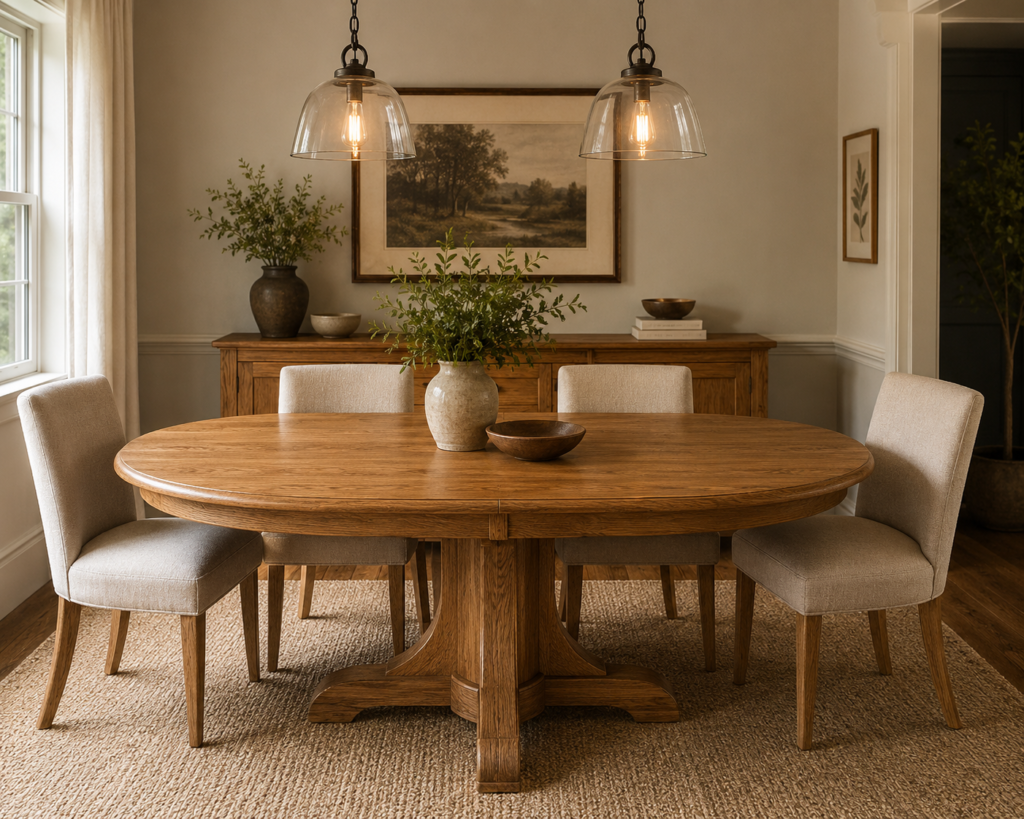
A classic solid oak oval dining table with natural grain finish, pendant lighting above, and upholstered side chairs — timeless warmth for any dining room.
Why Wood Species Matters More Than You Think
Walk into any quality furniture showroom and you will quickly realize that not all wood is created equal. The species you choose affects hardness, grain character, color depth, and how the table ages over years of family dinners, homework sessions, and holiday gatherings. For oval tables in particular, the grain pattern wraps beautifully around the curved ends—which means a visually striking wood becomes even more dramatic in this shape.
The Case for an Oak Oval Dining Table
Oak is arguably the most trusted hardwood in furniture history, and for good reason. An oak oval dining table—whether red oak or white oak—brings an open, pronounced grain that catches light across the entire surface. White oak, in particular, has surged in popularity thanks to its slightly cooler, more contemporary tone and its natural resistance to moisture, which makes it a sensible pick near a kitchen.
A solid oak oval dining table is also a generational investment. Properly maintained, an oak table can outlive the people who buy it. Refinishing is straightforward, which means that scratch from last Thanksgiving’s carving knife does not have to be a permanent reminder. The Janka hardness rating for white oak sits at 1,360 lbf—well above the threshold for everyday residential use.
If you want something that pairs effortlessly with modern cabinetry, light-toned floors, or Scandinavian-inspired interiors, an oval oak table is almost impossible to beat. Its versatility is the reason furniture designers return to it again and again.
The Timeless Appeal of an Oval Walnut Dining Table
If oak is the reliable workhorse, walnut is the show horse. An oval walnut dining table arrives with a naturally rich chocolate-to-espresso tone, a fine, flowing grain, and an air of understated luxury that very few other wood species can match. Walnut’s Janka hardness of around 1,010 lbf makes it softer than oak, meaning it will develop a patina—small marks and character lines—over years of use. Many homeowners consider this a feature rather than a flaw.
The depth of color in a walnut table means it reads beautifully in both traditional and contemporary spaces. Pair it with cream linen chairs and a statement pendant light, and the result is a dining room that looks straight out of an architectural magazine. The oval walnut dining table also complements warm-toned flooring—think honey-colored hardwood or terracotta tile—in a way that few other materials do.
Dark Wood Oval Dining Tables: Drama with Purpose
Sometimes you want the table to be the statement. A dark wood oval dining table—whether achieved through naturally dark species like wenge or through a stained finish on oak or ash—commands attention without being loud. Dark surfaces create a sense of intimacy at dinner, making the table feel like a contained world of warm light and good food.
The practical consideration with a dark oval dining table is maintenance. Water rings and dust show more readily on very dark finishes, so the type of protective coat applied matters. Look for a hard-wax oil or lacquer finish that gives daily protection while preserving the natural depth of the wood. A wood oval dining table in a dark finish is genuinely striking—just go in with realistic expectations about upkeep.
Choosing the Right Base: The Pedestal Oval Dining Table vs. Four-Leg Options
The base of a table does far more than hold the top off the floor—it determines how many people fit comfortably, how easy cleaning becomes, and how the overall silhouette reads from across the room. For oval tables, this choice comes down primarily to two camps: the pedestal and the leg.
Everything You Need to Know About the Oval Pedestal Dining Table
An oval pedestal dining table places the entire structural load on one or two central columns rather than four corner legs. The result is transformative. Without legs interrupting the perimeter, seating becomes completely flexible—you can slide chairs anywhere around the oval, seat an extra guest at either end, or simply enjoy the unobstructed legroom that a pedestal provides.
The pedestal oval dining table is also visually lighter. The base takes up less visual real estate, which makes it an excellent choice in smaller dining rooms or in open-plan spaces where you want the table to feel airy rather than imposing. A single turned column with a cross-foot base reads as elegant and traditional, while a brushed-metal or tapered concrete pedestal can push the same shape into firmly contemporary territory.
Structurally, reputable pedestal tables are engineered to handle the cantilevered load well, but it is worth noting that a very long large oval dining table—say, 96 inches or more—often requires a double-pedestal construction to prevent flex at the ends. When shopping, always ask whether the base has been load-tested for the full seating capacity.
Four-Leg Oval Tables: Tradition and Stability
A four-legged oval shape dining table feels more architecturally grounded. The legs, especially when tapered or turned with care, become a design element themselves. They pair naturally with a dining chair that has visible joinery and natural materials, creating a cohesive, craft-forward aesthetic that many homeowners prefer.
The trade-off is corner seating. End chairs at a four-legged table may feel slightly constrained depending on where the legs are positioned, so always check the leg placement before purchasing. A good manufacturer will set the legs in enough from the perimeter to allow comfortable seating at every position.
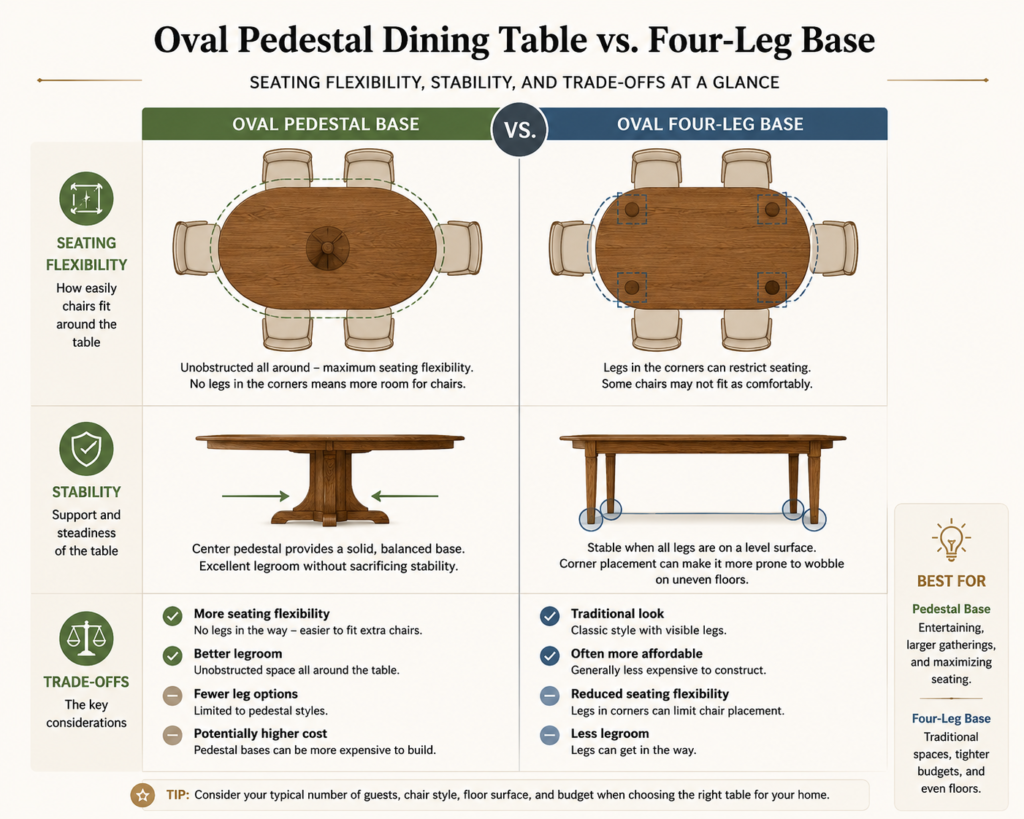
Infographic: Oval pedestal dining table vs. four-leg base — seating flexibility, stability, and trade-offs at a glance. Dashed squares indicate corner positions restricted by legs.
Modern and Contemporary Oval Dining Tables: Redefining the Shape
The word “dining table” may conjure images of thick turned legs and heavy mahogany, but the modern oval dining table has completely rewritten that script. Today’s designers are pairing oval wood tops with unexpected base materials—brushed brass, powder-coated steel, hand-poured concrete, and even live-edge slabs—to create pieces that feel genuinely current.
What Makes a Dining Table Contemporary
A contemporary oval dining table typically shares a few defining characteristics: clean lines without decorative carving, a contrast between the warmth of wood and the cool precision of metal or stone, and a restraint in proportion that lets the oval silhouette read clearly rather than getting lost in decoration.
The oval dining tables contemporary market has grown significantly in the last five years, driven by the open-plan living trend. When the dining area flows into the kitchen and living room without walls to define it, the furniture has to do more visual heavy lifting. An oval table with a sculptural base becomes both functional seating and a piece of art that defines the zone.
Mixing Wood with Metal and Stone
One of the most effective approaches in current interior design is combining an oval wood dining table top with a metal trestle or hairpin-style base. The contrast of organic warmth above and industrial precision below creates a dynamic tension that works in loft apartments, converted farmhouses, and modern suburban homes alike.
For those who want maximum drama, an oval modern dining table with a smoked glass or thick marble top and a blackened steel pedestal is the current peak of aspirational dining design. It reads as bold, sophisticated, and—importantly—scalable, from a cozy four-seater to a grand ten-person gathering table.
Getting the Size Right: From Oval Kitchen Table to Large Dining Table
Size is where a lot of people make expensive mistakes. The most common error is buying too small—the table looks generous in the showroom but feels like a card table once it’s surrounded by six adults. The second most common mistake is buying too large, leaving insufficient clearance for chairs to pull back and people to walk around comfortably.
The Rule of 36 Inches
Interior designers and space planners consistently recommend a minimum of 36 inches between the edge of the table and any wall or furniture. This allows a chair to be pulled back fully and someone to pass behind a seated person without conflict. For open-plan spaces, 48 inches is the gold standard—it feels generous and comfortable even during a busy dinner party.
Sizing Your Oval Kitchen Table or Dining Room Table
Here’s a practical size guide that accounts for real human bodies, not catalog models:
- 2–4 people: An oval kitchen table around 42–54 inches long works well in a breakfast nook or small eat-in kitchen.
- 4–6 people: A mid-range dining table oval at 60–72 inches seats a family comfortably with room for dishes.
- 6–8 people: Aim for 78–84 inches. This is the most popular size for a primary dining room table oval.
- 8–10 people: A large oval dining table at 90–108 inches is what you need for regular entertaining.
- 10+ people: Step up to 108 inches or more. A double-pedestal large oval table is the structural and aesthetic solution here.
Remember that width matters as much as length. An oval’s narrower dimension should be at least 36 inches to allow comfortable place settings on both sides and a centerpiece without things feeling cramped. Most standard oval shaped dining table options run 38–44 inches wide, which works beautifully.
Extendable Oval Dining Tables: The Flexible Solution
For households that entertain irregularly—a quiet weeknight dinner for two that transforms into a holiday feast for twelve—an extendable oval table dining format with leaf inserts is one of the smartest furniture investments available. The best versions maintain the oval shape even when extended, often transitioning to a more rounded rectangle rather than breaking the silhouette entirely. Look for butterfly-leaf mechanisms, which store the extra leaf inside the table and deploy without removing anything from the room.
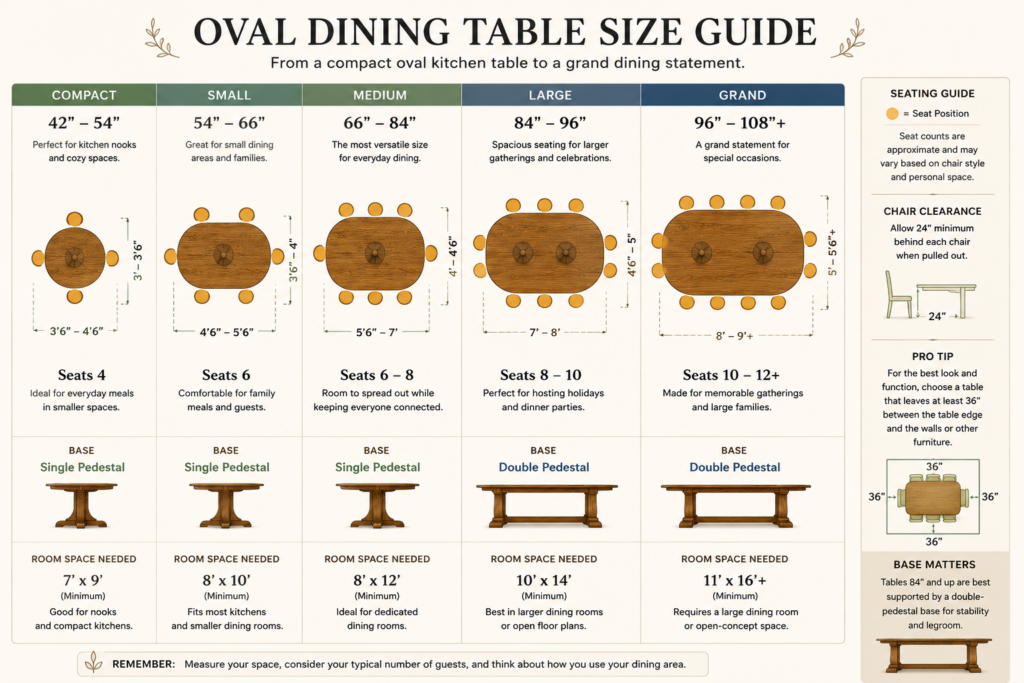
Oval dining table size guide: from a compact oval kitchen table (42–54″) for a kitchen nook, up to a grand large oval dining table (96–108″+) requiring a double-pedestal base. Amber circles show seat positions.
Solid Wood Oval Dining Tables: Why “Solid” Is Worth Every Extra Dollar
Walk into any budget furniture retailer and you will encounter a lot of veneered MDF tables that look similar to solid wood at a fraction of the price. There is a time and place for veneer—but if longevity, repairability, and heirloom potential matter to you, a solid wood oval dining table is worth the investment.
The Difference Between Solid and Veneered Wood
A solid oak oval dining table or a solid wood oval dining table in any species is constructed from continuous planks of real timber all the way through. You can sand it, stain it, re-oil it, or refinish it if life leaves its marks—and a skilled craftsperson can restore it to near-original condition decades later. Veneered tables have a thin layer of real wood over an engineered core; they cannot be sanded or refinished the same way, and damaged edges or corners are difficult to repair invisibly.
The other practical advantage of solid wood oval dining table construction is structural resilience under load. Real wood expands and contracts with humidity in a manageable way when properly dried and finished; engineered boards can delaminate if exposed to significant moisture fluctuations—a real risk in homes where the kitchen and dining areas share the same space.
Questions to Ask Before Buying Solid Wood
- Is the timber kiln-dried? This reduces the risk of warping after you bring it home.
- What finish is applied? Hard-wax oil is increasingly popular because it’s easy to spot-repair.
- Are any joints glued or doweled, and how are the planks edge-jointed? More glue seams mean more potential weak points over decades.
- Does the manufacturer offer refinishing or servicing? The best solid wood furniture brands back their products with long-term care programs.
Caring for Your Oval Dining Table Wood: The Long Game
You’ve made the investment. Now the question is how to protect it for the next twenty, thirty, or even fifty years. The good news: caring for a quality oval dining table wood surface is not complicated. It just requires consistency.
Daily and Weekly Care
Wipe spills immediately with a damp cloth—never leave liquid sitting on any wood surface. For daily cleaning, a barely damp microfiber cloth followed by a dry pass is all you need. Avoid silicone-based furniture polishes, which build up over time and create a plastic-feeling surface that’s hard to remove when you eventually want to refinish.
Protecting Against Heat and Scratches
Always use placemats and trivets. Even a well-finished wooden oval dining table will show heat rings if a hot casserole sits directly on it. Felt pads under decorative objects prevent fine scratches that accumulate into a dull surface over time. For extra protection, a custom-cut tempered glass top or clear table protector pad is a practical choice for households with young children.
Annual Refinishing for Oil-Finished Tables
If your oval wood dining table has a hard-wax oil finish, a light re-oiling once a year—more often in very dry climates—keeps the wood hydrated and the finish looking fresh. It takes about an hour, requires no special skills, and genuinely extends the life of the table by decades. It’s the closest thing furniture has to a spa day.
Styling an Oval Dining Room Table: Design Principles That Actually Work
Choosing the right table is only half the equation. How you style and furnish around it determines whether the space feels curated or chaotic.
Lighting Over the Table
A pendant light or chandelier that echoes the oval shape—long, linear, or an oval ring itself—creates a visual harmony that grounds the dining area even in open-plan spaces. The rule of thumb: the lighting fixture should be approximately two-thirds the length of the table. For a 72-inch oval dining room tables, aim for a fixture around 46–50 inches long.
Chair Choices That Complement the Curve
Round or curved-back chairs read beautifully with an oval dark wood dining table because they continue the softness of the shape. Upholstered seats in linen, boucle, or velvet add warmth and visual texture. For a more graphic, editorial look, pair a dining room table oval with bentwood or molded plastic chairs—the contrast between organic wood and modern material is intentionally striking.
Rugs, Runners, and Centrepieces
An oval rug under a contemporary oval dining table creates a perfect nested effect and defines the zone in an open-plan layout. Size the rug so that chair legs remain on it even when pulled back—typically 24 to 30 inches larger than the table in each direction. For centrepieces, odd-numbered groupings of varying heights—candles, a low vase, a stone object—work universally well on oval surfaces because the elongated shape allows for a deliberate composition rather than a single central point.
Frequently Asked Questions About Oval Dining Tables
What is the best wood for a solid oval dining table in a busy family home?
White oak is consistently the top recommendation for family households. A solid oak oval dining table in white oak has a Janka hardness of 1,360 lbf—hard enough to resist everyday scratches—while its slightly closed grain makes it less prone to deep staining than open-grained species like red oak. It also takes a range of finishes beautifully, from natural pale tones to deep stained colors. Hard maple is another excellent option if you prefer a very smooth, uniform surface.
How many people can comfortably fit at a large oval dining table?
A large oval dining table at 96 inches can seat 10 people comfortably with standard 24-inch-per-person spacing. At 108 inches you can reach 12 seats, particularly if you’re using a pedestal oval dining table base that eliminates corner-leg obstructions. Remember that comfortable seating means each person has 24–26 inches of table width and approximately 12 inches of knee clearance below the tabletop.
Is an oval walnut dining table too delicate for everyday use?
Walnut is softer than oak, but that does not make it fragile. An oval walnut dining table with a quality hard-wax oil or conversion varnish finish is perfectly suited for daily family use. The patina that develops over years is considered a desirable characteristic of the wood—it tells the story of your household in a way that very hard, scratch-resistant surfaces simply cannot. Just maintain it with appropriate oil products annually and avoid leaving standing water on the surface.
What is the advantage of an oval pedestal dining table over a four-legged design?
The primary advantage of an oval pedestal dining table is seating flexibility. Without legs at the corners, you can place chairs at any point around the perimeter—including the very ends—and accommodate one or two extra guests more easily. The open underside also makes cleaning significantly easier and creates a more visually open feel in smaller rooms. The trade-off is that very long pedestal tables may require a double-pedestal base for structural rigidity.
Can a modern oval dining table work in a traditional interior?
Absolutely. An oval modern dining table with clean lines and natural wood tones is one of the most versatile pieces in interior design. In a traditional room with wainscoting, crown molding, and classic chairs, a contemporary table creates a curated contrast that feels intentional rather than mismatched. The key is to connect materials—if the room has dark walnut cabinetry, an oval walnut dining table creates a clear design thread even if the base is modern in form.
How do I choose the right size oval kitchen table for a small space?
Start with your room dimensions, subtract 36 inches from each wall (for chair clearance), and use whatever rectangular space remains as your maximum table footprint. An oval kitchen table should fit comfortably within that footprint. For very compact kitchens, a 42 x 28-inch oval seats two on the long sides and optionally one more at each end—a surprising amount of flexibility from a small footprint. Always measure doorway widths as well; an oval shaped dining table is easier to maneuver than a rectangle because its curved ends tuck through tight angles more gracefully.
What finish is most durable for a dark wood oval dining table?
For a dark wood oval dining table, a conversion varnish (sometimes called catalyzed lacquer) offers the most durable surface—highly resistant to water, heat, and alcohol. It is typically applied in a professional finishing environment rather than DIY. For those who prefer the natural feel of wood, a pigmented hard-wax oil achieves a dark tone while remaining hand-renewable at home. Avoid standard lacquer on very dark surfaces, as scratches show up as light marks against the dark background and are harder to touch up.
Are oak oval dining tables currently on trend?
The oak oval dining table—particularly in white oak with a matte natural or lightly wire-brushed finish—is absolutely central to current design conversations. The Japandi aesthetic (Japanese-Scandinavian fusion), warm minimalism, and the biophilic design movement have all converged to make natural white oak one of the most desired furniture materials of the decade. It pairs effortlessly with warm plaster walls, natural linen, handmade ceramics, and the muted earthy palette that currently dominates residential interiors.
What should I look for in a contemporary oval dining table?
In a contemporary oval dining table, prioritize three things: the quality of joinery between the top and the base (it should feel absolutely rigid with no wobble), the thickness and edge profile of the top (a thicker top with a tapered or chamfered edge reads as considered and well-made), and the quality of the finish (look closely for brush marks, drips, or uneven sheen on the end grain at the curved ends, which reveal a manufacturer’s quality control standards). A good oval dining tables contemporary piece should feel as well-crafted as it looks.
Is a wooden oval dining table easy to maintain compared to other materials?
A wooden oval dining table requires more care than glass or ceramic, but it also rewards that care in a way those materials cannot. The maintenance routine is simple: wipe spills immediately, use placemats and trivets, clean weekly with a barely damp cloth, and re-oil annually if it has an oil finish. In return, the table develops character over time, can be refinished if significantly damaged, and—unlike glass—will not shatter if something heavy falls on it. For most families, the trade-off strongly favors wood.
Conclusion
The right oval dining table is not just a surface for plates and glasses—it is the physical center of your household’s daily life. It’s where homework gets finished, where guests linger long after dessert, where the stories of your family accumulate in the grain and the surface over years of use. That is why choosing thoughtfully matters so much more with this purchase than with most furniture decisions.
Whether you are drawn to the quiet authority of a solid oak oval dining table, the moody richness of an oval walnut dining table, the flexible seating of a pedestal oval dining table, or the sharp lines of a modern oval dining table, the oval shape itself is a gift—it removes corners, welcomes people in, and scales from intimate to generous without ever losing its visual elegance.
Take your time with the size calculation. Touch the wood samples. Ask questions about the finish. And when you find the one that makes you want to set the table before you have even invited anyone over, trust that instinct. That’s the one.
→ Ready to shop? Use the size guide in this article to measure your space, decide on your wood species, and walk into any showroom with confidence.