

There’s a particular kind of stress that comes from standing in the middle of your own living room, coffee in hand, wondering why it still doesn’t feel like you. If you’ve typed how to decorate my house Decoradhouse into a search bar at 11 p.m. while scrolling through a hundred tabs of other people’s beautiful homes, you’re not alone — and you’re closer to an answer than you think.
Decorating a house isn’t about having an unlimited budget or a design degree. It’s about understanding a handful of principles that professional decorators quietly rely on, then applying them room by room, at whatever pace and price point fits your life. That’s exactly what we’re going to walk through here: practical, tested ideas pulled from real renovations, real gardens, and real front porches — not just inspiration boards that look nice but never quite translate into your actual space.
By the end of this guide, you’ll have a clear plan for tackling everything from your living room walls to your back patio, along with the kind of small, overlooked tricks that make a bigger difference than most people expect. And if you’re still asking yourself how to decorate my house Decoradhouse readers keep coming back to, the honest answer is: one deliberate room at a time, starting with the one that bothers you most.
How to Decorate My House Decoradhouse: Where to Start
Before you buy a single throw pillow, the smartest move is to slow down. Most decorating regret — the mismatched sofa, the paint color that looked different on the wall, the rug that’s just slightly too small — comes from skipping this first step.
Assess Your Space Before You Buy Anything
Walk through your home with a notebook (or your phone’s notes app) and simply observe. Which rooms get natural light in the morning versus the evening? Where do you and your family actually spend time versus rooms that sit unused? A 2023 survey by the National Association of Home Builders found that homeowners consistently overspend on formal living rooms that get used less than five hours a week, while underspending on kitchens and family rooms where most daily life happens. That single insight can reshape your entire budget before you spend a dollar.
Setting a Realistic Budget
A good rule of thumb borrowed from professional designers is the 10-30-60 split: roughly 10% of your budget on accessories and decor, 30% on furniture, and 60% reserved for anything structural — flooring, paint, lighting fixtures. This isn’t a rigid formula, but it prevents the common mistake of blowing the entire budget on one statement piece and having nothing left for the finishing touches that actually tie a room together.
Common Mistakes People Make When They Try to Decorate My House Decoradhouse Style
Even with good intentions, a handful of predictable mistakes trip up most homeowners. Recognizing them early can save weeks of second-guessing and returned furniture.
Buying Furniture Before Measuring the Room
It sounds obvious, but it’s one of the most common complaints designers hear: a beautiful sofa arrives and it simply doesn’t fit the flow of the room. Always measure doorways, hallways, and the intended space — including walking clearance — before ordering anything larger than a side table.
Matching Everything Too Perfectly
A living room where the curtains, rug, and throw pillows are all the exact same color scheme from one collection can look more like a hotel lobby than a home. Designers intentionally leave a little imperfection in color matching so a space feels collected over time rather than purchased in a single afternoon.
Ignoring the Room’s Natural Light
Paint colors and fabric tones shift dramatically depending on whether a room faces north, south, east, or west. A gray that looks soft and warm in a south-facing room can look cold and flat in a north-facing one. Always test paint swatches on the actual wall, at different times of day, before committing to a full room.
Decorating Every Room the Same Way
A house with truly consistent, individual character doesn’t mean every room looks identical — it means every room reflects the same underlying values of comfort, warmth, and simplicity, expressed differently based on that room’s function. This is the core idea behind most successful attempts at how to decorate my house Decoradhouse readers describe as finally feeling “finished.”
Home Upgrade Tips Decoradhouse Swears By
Once you know your priorities, the real fun begins. These home upgrade tips Decoradhouse style focus on maximum visual impact without a full renovation budget.
Small Changes, Big Impact
- Swap out hardware. New cabinet handles and drawer pulls cost very little but instantly modernize kitchens and bathrooms.
- Repaint just one wall. An accent wall in a bold, saturated color changes the entire mood of a room for the price of a single can of paint.
- Add layered lighting. Overhead lighting alone makes rooms feel flat and clinical. Combine ceiling fixtures with table lamps and floor lamps for warmth.
- Reupholster instead of replacing. A structurally sound sofa or armchair with worn fabric can look brand new for a fraction of replacement cost.
Lighting and Color Psychology
Color affects mood more than most homeowners realize. Research from the University of Texas found that overly bright, high-contrast environments were associated with higher stress and fatigue, while softer, warmer tones in living spaces correlated with lower reported anxiety. That’s why so many upgrading tips Decoradhouse designers recommend warm neutrals — soft taupe, sage green, warm white — for main living areas, reserving bold colors for smaller accent spaces like powder rooms or reading nooks.
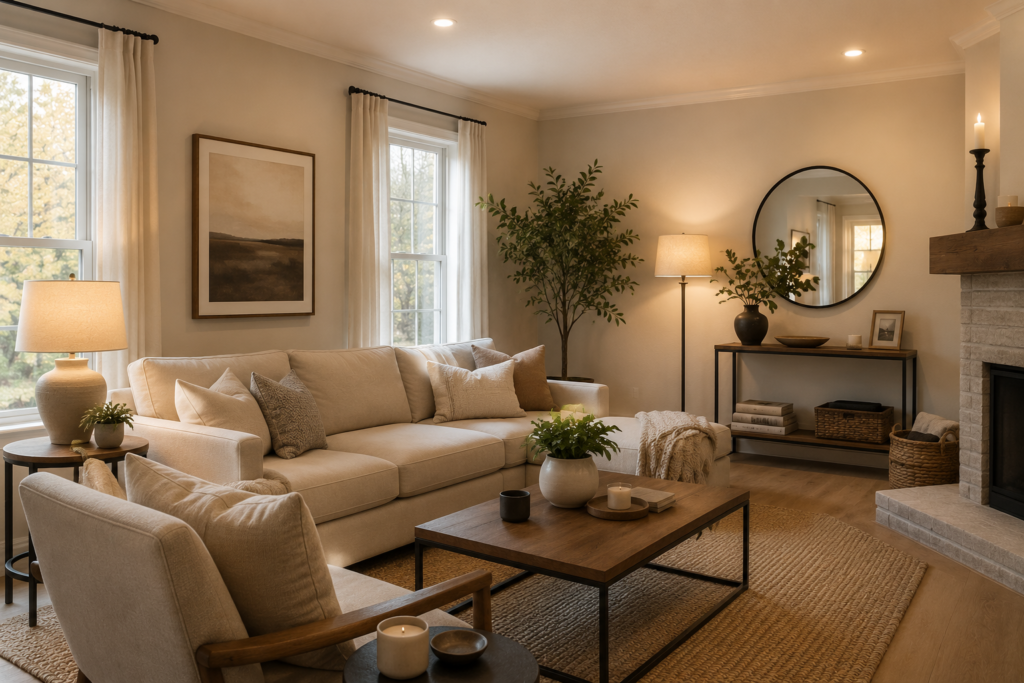
A well-lit, neutral-toned living room is one of the simplest home upgrade tips Decoradhouse recommends for instant visual warmth.
Upgrading Tips Decoradhouse Experts Recommend for Every Room
Different rooms have different jobs, and decorating them the same way rarely works. Here’s a breakdown that keeps each space functional and cohesive.
Living Room
The living room is usually the anchor of the house, so start with a focal point — a fireplace, a media console, or a large window. Arrange furniture to face that focal point rather than pushing everything against the walls, which is a common mistake that makes rooms feel like waiting areas instead of lived-in spaces.
Kitchen
Open shelving, a fresh backsplash, or even repainting cabinets can transform a kitchen without a full remodel. If your kitchen currently feels cluttered, consider that studies on home organization consistently show that visible clutter increases perceived stress levels, even when the mess itself is minor. Clear counters do more psychological heavy lifting than people expect.
Bedroom
Bedrooms benefit from a “less but better” approach. Invest in quality bedding and blackout curtains before spending on decorative accessories — sleep quality research consistently links a cooler, darker, quieter bedroom environment to better rest, which matters more long-term than any accent pillow.
Renovation Tips Decoradhouse Homeowners Trust
Sometimes cosmetic changes aren’t enough, and it’s time to consider structural updates. These renovation tips Decoradhouse professionals use most often focus on projects with the best return on investment.
Renovation Tips and Tricks Decoradhouse Contractors Use
According to Remodeling Magazine’s annual Cost vs. Value report, minor kitchen remodels and garage door replacements consistently rank among the highest return-on-investment projects, often recouping 70-90% of their cost at resale. Compare that to major additions like sunrooms, which frequently recoup less than half their cost, and it becomes clear that “bigger” doesn’t always mean “smarter” when it comes to renovation tips and tricks Decoradhouse experts actually recommend.
A few tricks that consistently pay off:
- Replace outdated light fixtures before repainting — new fixtures often reveal that a “boring” room just needed better lighting all along.
- Refinish existing hardwood floors instead of replacing them; refinishing typically costs a third of full replacement.
- Update grout and caulk in bathrooms before assuming a full renovation is necessary — discolored grout ages a bathroom faster than almost anything else.
When to DIY vs Hire a Pro
Cosmetic work — painting, hanging shelves, assembling furniture — is generally safe DIY territory. Anything involving electrical wiring, plumbing, or load-bearing walls should go to a licensed contractor. The Consumer Product Safety Commission reports thousands of home injuries annually tied to DIY electrical and structural work, which is a good reminder that saving money on labor isn’t worth it when safety codes are involved.
Decor Tips Decoradhouse Style: Bringing Personality Into Your Home
This is where a house stops looking like a showroom and starts looking like your home. Good decor tips Decoradhouse designers use aren’t about trends — they’re about restraint and intentionality.
Mixing Textures and Patterns
A room with only smooth, matching surfaces can feel sterile. Mix materials — a woven jute rug under a sleek glass coffee table, linen curtains against a leather sofa. The contrast is what makes a space feel curated rather than purchased as a matching set.
Sustainable Decor Choices
More homeowners are choosing secondhand and vintage pieces, both for cost savings and sustainability. The EPA estimates that furniture and furnishings account for a significant share of municipal solid waste each year, and buying pre-loved furniture — refinished, reupholstered, or simply cleaned up — keeps usable items out of landfills while often costing 50-70% less than new.
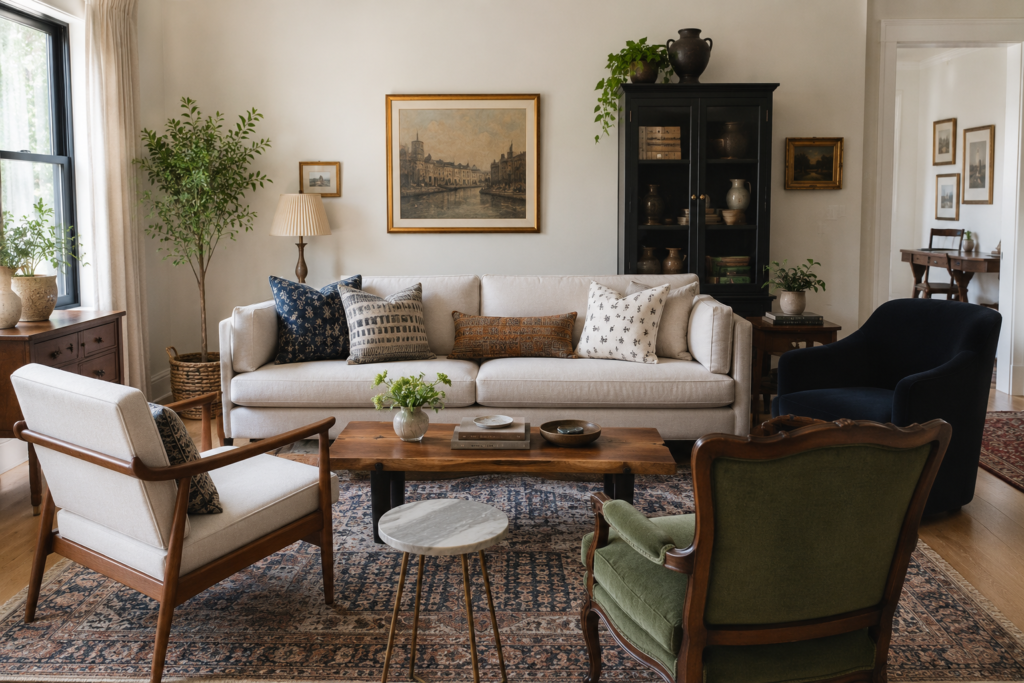
Mixing vintage and modern pieces is one of the most repeated decor tips Decoradhouse stylists give to clients on a budget.
Decoradhouse Home Exterior Hacks That Boost Curb Appeal
The outside of your home is the first impression it makes — and often the most neglected. These Decoradhouse home exterior hacks focus on quick wins that make a measurable difference.
Home Exterior Decoradhouse Essentials
Real estate appraisers frequently cite curb appeal as adding measurable resale value, with a fresh front door color, clean landscaping, and updated house numbers among the cheapest upgrades with the most visible impact. A few home exterior Decoradhouse basics worth prioritizing:
- Power-wash siding, walkways, and the driveway — dirt buildup ages a house more than most people realize.
- Repaint or replace a worn front door; deep colors like navy or forest green consistently test well with buyers and visitors alike.
- Replace outdated house numbers and mailbox hardware.
- Trim overgrown shrubs so windows and architectural details are visible from the street.
Paint, Plants, and Pathways
A clearly defined front walkway — even a simple gravel or paver path — visually organizes a yard and guides the eye toward the entrance. Pair it with symmetrical planters or low hedges for a polished, intentional look that doesn’t require a landscaping budget.
How to Renovate My Patio Decoradhouse Style
Outdoor living spaces have become one of the most requested upgrades in recent years, and for good reason — a functional patio effectively adds another room to your home. If you’re wondering how to renovate my patio Decoradhouse style without overspending, start with the surface itself.
Choosing Materials That Last
Concrete pavers remain one of the most cost-effective, durable patio surfaces, especially compared to poured concrete, which cracks more easily in freeze-thaw climates. Composite decking, while pricier upfront, requires far less maintenance than traditional wood and tends to outlast it by decades.
Creating an Outdoor Living Room
Treat your patio like an actual room: define zones for lounging, dining, and cooking. Outdoor rugs, weather-resistant cushions, and string lighting turn a bare concrete slab into a space people actually want to spend evenings in. A pergola or simple shade sail also extends usability into the hottest parts of the day, which matters more than most homeowners initially budget for.
Garden Tips Decoradhouse Gardeners Live By
A beautifully decorated house often loses impact if the yard around it feels like an afterthought. These garden tips Decoradhouse landscapers recommend focus on beauty that doesn’t demand hours of weekly maintenance.
Low-Maintenance Landscaping
Native plants are, without exaggeration, one of the highest-value choices a homeowner can make. Because they’re adapted to local rainfall and soil conditions, native species typically need less watering, less fertilizer, and less pest intervention than imported ornamental plants — while also supporting local pollinators.
Seasonal Planting Guide
- Spring: Bulbs like tulips and daffodils planted the previous fall, plus early perennials for structure.
- Summer: Heat-tolerant flowering plants and mulch refreshment to retain soil moisture.
- Fall: Ornamental grasses and shrubs for texture once flowers fade, plus bulb planting for next spring.
- Winter: Evergreens and structural hardscaping become the visual anchor when everything else goes dormant.
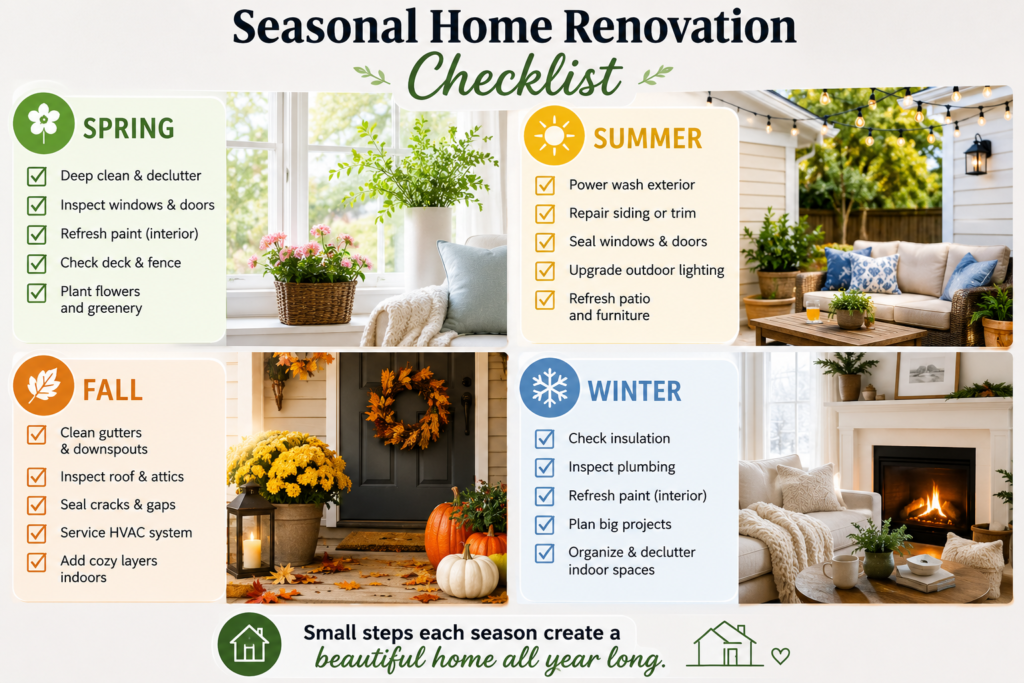
A simple seasonal checklist like this makes it easier to plan renovation tips and tricks Decoradhouse readers can tackle gradually instead of all at once.
Putting It All Together: How to Decorate My House Decoradhouse Checklist
Once you’ve absorbed all of the ideas above, it helps to have a simple sequence to follow instead of trying to do everything at once. Here’s the order most designers actually recommend when someone asks how to decorate my house Decoradhouse style from scratch:
- Declutter first. No amount of new decor fixes a room that’s still full of things you don’t use or love.
- Fix the bones. Address paint, flooring, and lighting before buying furniture — these are the hardest and most expensive things to change later.
- Anchor with a few key pieces. A sofa, a bed frame, a dining table — invest in the pieces you’ll touch every day.
- Layer in texture and color. Rugs, curtains, and throw pillows are where personality gets to show up without much financial risk.
- Finish with personal touches. Art, photographs, and collected objects are what make a house look lived-in rather than staged.
- Step outside and repeat. Apply the same sequence — declutter, fix the bones, anchor, layer, personalize — to your patio, garden, and exterior.
This checklist works whether you’re furnishing an entire empty house or simply refreshing a single tired room. The goal isn’t to finish everything in one weekend; it’s to always know what the next right step is, so the project never stalls out halfway through.
Frequently Asked Questions
How do I start decorating my house on a small budget?
Start with what’s already in the home. Rearranging existing furniture, decluttering, and adding a fresh coat of paint typically cost under a few hundred dollars but create the biggest visible change before any new purchases are needed. This is usually the first question people ask when they search how to decorate my house Decoradhouse style on a tight timeline, and it’s also the easiest one to answer well.
Where can I find more how to decorate my house Decoradhouse ideas for my specific home?
Local home tours, neighborhood open houses, and even walking through model homes at nearby developments can offer ideas that are more realistic for your climate, house size, and architecture than generic inspiration photos found online. Pairing those in-person ideas with a clear budget and the checklist above tends to produce the most livable results.
What is the cheapest way to upgrade my home exterior?
Power-washing, repainting the front door, and refreshing mulch beds are consistently the lowest-cost, highest-impact updates. All three can usually be completed in a single weekend.
How much does a small home renovation typically cost?
Costs vary widely by region and scope, but minor kitchen and bathroom updates — new hardware, paint, and fixtures rather than full remodels — generally fall in the low thousands rather than tens of thousands of dollars.
What plants are best for a low-maintenance garden?
Native perennials, ornamental grasses, and drought-tolerant shrubs suited to your specific climate zone require the least ongoing care. A local extension office or garden center can confirm which species are native to your region.
How do I make my patio feel more like an extra room?
Define clear zones for seating, dining, and lounging, add an outdoor rug, and incorporate layered lighting such as string lights or lanterns. Weatherproof cushions and a shade structure make the space usable for more hours of the day.
Should I hire a professional or DIY my home renovation?
Cosmetic updates like painting and furniture assembly are generally safe to DIY. Anything involving electrical, plumbing, or structural changes should go to a licensed professional to avoid safety and code issues.
What colors make a small room look bigger?
Soft, warm neutrals and whites reflect more light and reduce visual boundaries, making small rooms feel more open. Glossy or satin finishes also reflect light more than flat paint, adding to the effect.
How often should I update my home’s decor?
There’s no fixed timeline, but many designers suggest reassessing major decor every 5-7 years, while smaller refreshes — pillows, art, plants — can happen seasonally without much cost.
Final Thoughts
Decorating a house is rarely about one big transformation. It’s a series of smaller, intentional decisions — a better light fixture here, a repainted door there, a garden bed that finally makes sense for your climate — that add up to a home that actually reflects how you live. Whether you’re tackling a single room this weekend or planning a slower, room-by-room overhaul, the same principle holds: observe your space first, spend where it matters most, and let personality guide the smaller choices. That’s really the whole idea behind good design — not perfection, just a home that feels unmistakably like yours.