

Ever walked into your own living room and felt strangely unsettled, even though nothing was technically “wrong”? You’re not imagining it. The clutter on the side table, the lamp that’s too dim, the couch facing the wrong way — these small misalignments quietly chip away at how relaxed you feel at home. That’s exactly the kind of problem drhomey handy tips are built to solve: not a full renovation, but a series of small, smart corrections that change how a space actually feels to live in.
If you’ve ever searched for tips drhomey style — quick, no-nonsense, genuinely useful — this guide is for you.
Most of us don’t need a designer on speed dial. We need someone to point out the one shelf that’s in the wrong place, the lighting that’s working against us, or the five-minute habit that would stop the mess from piling up in the first place. That’s the spirit behind this guide. We’re going room by room, problem by problem, with fixes that are realistic for an actual Tuesday evening, not a Pinterest fantasy.
What makes this approach different is that it treats your home as a system, not a showroom. A space that looks pretty in photos but doesn’t function for your real life isn’t actually well designed — it just looks the part. Good drhomey interior design thinking starts with how you move through a room, what you reach for first, and where things naturally pile up, and then solves for that.
By the end of this article, you’ll have a toolkit of practical, low-cost ideas you can start using today — no contractor, no big budget, no overwhelm. Just steady, sensible upgrades that add up to a home that finally works the way you do.

A quick-glance summary of the easiest wins, room by room.
Why Small Fixes Matter More Than Big Renovations
It’s tempting to think the answer to a chaotic home is a bigger budget. New furniture, a full repaint, maybe a kitchen remodel. But research on environmental psychology tells a different story. A clinical psychologist has noted that existing in a cluttered environment taxes our brains because the cluttering objects compete for our attention. That means the issue often isn’t a lack of style — it’s a lack of order.
A UCLA study found a link between a high density of household objects and elevated cortisol, the hormone most associated with stress. Separately, a study found that women who saw their homes as messy had higher cortisol levels throughout the day than those who experienced their homes as organized and relaxing. In other words, your home’s order — or lack of it — has a measurable effect on your body, not just your mood.
This is precisely why drhomey handy tips focus on small, repeatable actions instead of expensive overhauls. Disorganization can fuel stress, distraction, and fatigue, and home organization strategies that pair functional and aesthetic design help nurture calm and emotional balance. You don’t need a new couch. You need the couch you already have to stop blocking the doorway.
There’s also a productivity angle that’s easy to overlook. One study published in a psychology journal found that people who worked in a tidy space for just ten minutes were twice as likely to choose healthier options afterward compared to people working in a messy space. Order doesn’t just calm you down — it changes the decisions you make next.
The CALM Method: A Simple Framework Worth Borrowing
If you want a mental model for tackling any cluttered space, a four-step framework can help: clear out the area completely to create a clean slate, assess each item honestly by asking whether it serves a purpose or belongs in that space, and group similar items together based on function and frequency of use, since that mirrors how our brains naturally sort information.
You don’t need to memorize an acronym. The point is simpler than that: empty the space, judge each item on its actual usefulness, then group what’s left by how you use it — not by what it looks like in a basket. It’s a principle that shows up again and again throughout this collection of drhomey handy tips.
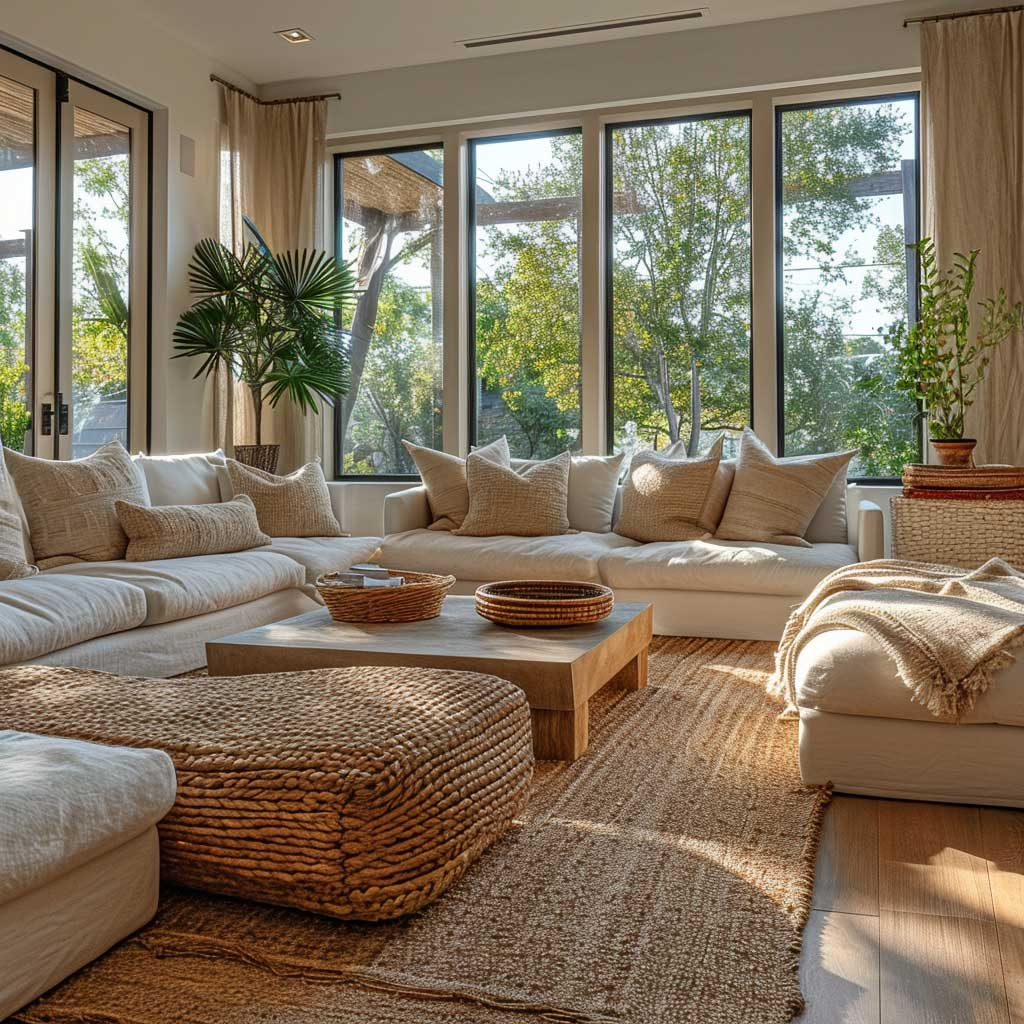
Layered textures and warm, earthy tones — proof that good design doesn’t need to be expensive to feel intentional.
Living Room: Where First Impressions and Real Life Collide
The living room carries a lot of weight. It’s where guests form their first opinion of your home and where you actually unwind after a long day. Those two jobs sometimes pull in different directions, which is why this room benefits the most from thoughtful interior design drhomey principles.
Float Your Furniture Away From the Walls
One of the most common mistakes in small and mid-sized living rooms is pushing every piece of furniture against the wall to “save space.” It rarely works. Instead, it creates one big empty zone in the middle of the room and forces conversations to happen across a canyon.
Try pulling your sofa even six to twelve inches off the wall and angling a chair toward it instead of lining everything up like a waiting room. This single move creates an actual conversation zone, and it instantly makes the room feel more intentional rather than accidental.
Layer Your Lighting Instead of Relying on One Bulb
A single overhead light does your room no favors. It flattens everything and makes the space feel more like an office than somewhere you’d want to relax. The fix is layering: a floor lamp in one corner, a table lamp near the seating, and your overhead light reserved for when you actually need full brightness, like cleaning.
This is a fix interior designers lean on constantly because it costs very little and changes the entire mood of a room within minutes.
Rotate, Don’t Just Accumulate
Here’s a tip that rarely gets mentioned: rotating one or two decor items every month keeps a room feeling alive without buying anything new. Swap a vase for a stack of books, switch a throw pillow cover, move a plant to a different corner. The room reads as “cared for” rather than static, and it’s a habit that costs nothing but a few minutes.
Kitchen: The Room That Reveals Whether a Home Actually Works
If the living room is about first impressions, the kitchen is about honesty. It’s the room where bad organization gets exposed fastest, because you’re in it constantly, often in a hurry. A handful of focused drhomey handy tips can fix most of the daily friction points here without touching a single cabinet’s layout permanently.
Group by Task, Not by Category
A lot of kitchens are organized the way a store shelves products — all the pots together, all the utensils together — but that’s not actually how people cook. A more useful system groups items by the task they’re used for: a baking zone with measuring cups and mixing bowls near the flour, a coffee zone with the mugs right above the machine, a prep zone with cutting boards and knives near the counter you actually chop on.
This single shift, drawn from one of the more practical drhomey handy tips, saves you from the daily ritual of opening four drawers to find one spoon.

The inside of a cabinet door is one of the most underused spots in any kitchen — a slim rack turns it into real storage.
Use the Inside of Cabinet Doors
Most people treat cabinet doors as dead space. They’re not. A slim shelf or a few adhesive hooks on the inside of a cabinet door can hold spice jars, measuring spoons, or pot lids that would otherwise clutter a drawer. It’s one of the simplest upgrades in this guide and one of the most underused.
Keep Counters Mostly Empty
A loaded countertop doesn’t just look messy — it actively slows you down every time you need workspace. Aim to keep about 80 percent of your counter clear at any given time. Appliances you use daily can stay out; everything else goes into a cabinet, even if that means a slightly more deliberate placement system.
Bedroom: Designing for Rest, Not Just Looks
The bedroom often gets neglected because no one else sees it. But it’s arguably the room where good design matters most, since it directly affects your sleep and your ability to wind down — and it’s a room where simple drhomey handy tips tend to outperform expensive purchases.
Use Under-Bed Storage the Right Way
Under-bed bins are popular, but people often misuse them by stuffing in items they reach for weekly. That defeats the purpose. Reserve under-bed storage for genuinely seasonal items — winter blankets in summer, beach gear in winter — so you’re not constantly hauling the bed frame around to grab daily essentials.
Rethink Your Lighting Before Bed
Swapping a bright overhead light for a single warm lamp in the evening does more for your sleep routine than most people expect. It signals to your body that the day is winding down, and it’s a far cheaper fix than a sleep gadget.
Choose One Calming Color, Not Four
A bedroom with too many competing accent colors can feel busier than it looks on paper. One of the more reliable tips drhomey offers for better sleep spaces is sticking to a single calming base tone — a soft green, a warm neutral, a muted blue — and letting your textures (linen, wood, wool) do the visual work instead of competing colors.
This actually lines up with where interior design is heading more broadly. The defining shift in design right now is away from stark minimalism toward layered, lived-in spaces with natural materials and palettes inspired by the world outside, and bedrooms are one of the rooms where that shows up most clearly.
Bathroom: Small Room, Big Impact
Bathrooms are usually the smallest room in the house, which means small problems get magnified fast. A single damp towel left on the floor can make the whole room feel chaotic.
Add Vertical Storage Above the Toilet
This is one of the most overlooked spaces in the entire house. A slim shelf mounted above the toilet tank can hold rolled towels, baskets of toiletries, or a small plant, and it adds real storage without taking up an inch of floor space.
Swap Heavy Curtains for Light Linen
A heavy, dark shower curtain visually shrinks a small bathroom. Switching to a lighter linen or cotton curtain — even in a neutral tone — opens the room up considerably and feels like a much bigger change than it actually is to install.
Entryway: The Room That Sets the Tone for Everything Else
The entryway is the most underrated room in the house. It’s the first thing you see when you walk in, and it’s often the first thing to collapse into chaos because there’s no system for what happens to keys, mail, and shoes the second you step through the door.
Create a Landing Zone
A simple tray or shallow bowl by the door for keys and mail stops the slow creep of clutter onto your kitchen counter. It sounds almost too basic to matter, but this is genuinely one of the highest-impact, lowest-effort drhomey handy tips in this entire list, because it intercepts mess before it spreads to other rooms.
Hook Height Matters More Than You’d Think
If you live with kids, mounting hooks at two different heights — one within easy reach for them, one higher for adults — means jackets actually get hung up instead of dropped on the floor. It’s a small adjustment that solves a recurring argument in a lot of households.
How to Build These Habits Without Burning Out
Knowing the tips is one thing. Actually keeping a home organized long-term is another. Spending five minutes each day, implementing a weekly reset routine, and focusing on more extensive monthly purges all help combat clutter before it has a chance to accumulate. The goal isn’t a perfect home overnight — it’s a system that prevents things from sliding backward.
It’s also worth remembering that decluttering isn’t just about square footage. Digital clutter causes stress too, and a system for automated backups, consistent file naming, and regular digital cleanups can support a broader sense of order that complements the physical changes you’re making at home.
A Realistic Weekly Rhythm
- Daily (5 minutes): Clear flat surfaces — counters, the entryway tray, the nightstand.
- Weekly (20 minutes): Reset one room fully — return stray items to their proper zone.
- Monthly (30–60 minutes): Do a small purge — donate or discard anything you haven’t used in three months.
This rhythm matters more than any single big cleaning day, because research has found that removing or controlling clutter can directly reduce the stress that stems from mess, helping people feel happier, less anxious, and more confident — and that benefit compounds the longer the habit sticks.
Where Design Is Heading and What It Means for Your Home
It helps to know what direction interior design is actually moving in, so your small updates feel current rather than dated in a year. Designers are largely unanimous that stark, all-white interiors are on their way out, replaced by warmer, more personal spaces rooted in comfort and craftsmanship rather than fleeting trends.
One designer described the dominant palette shift as a move toward warm, rich, earthy tones — including terra cottas, burgundy, pinks, greens, blues, and neutrals, replacing the cooler gray palettes that defined the last decade. You don’t need to repaint your whole house to benefit from this; a single accent wall, a new set of cushion covers, or a swapped rug can bring your space in line with where things are heading.
There’s also a renewed appreciation for closed-off, purpose-built spaces. Builders and homeowners are increasingly moving away from fully open floor plans, instead designating rooms for specific roles like a home office, craft room, or reading nook, which can help keep work and rest mentally separate even within a smaller home. If you’ve got a spare corner, consider whether it could become a defined “zone” rather than overflow storage.
None of this requires a renovation budget. It just requires intentional small choices — which is the whole premise behind sound drhomey interior design thinking: function first, aesthetics layered on top, and nothing added just because it’s trendy.
Common Mistakes That Undo Good Intentions
Even well-meaning organization efforts can backfire if you fall into a few predictable traps. Knowing these pitfalls is as valuable as any of the drhomey handy tips listed above, since avoiding a mistake often saves more time than a new fix creates.
- Buying storage before decluttering. Bins and baskets feel productive, but if you fill them with things you don’t actually need, you’ve just made clutter look tidier instead of solving the problem.
- Organizing by aesthetics instead of habits. A beautifully arranged shelf that doesn’t match how you actually grab items will fall apart within a week.
- Trying to fix every room at once. Pick one room, finish it, and let the momentum carry you to the next rather than starting five projects simultaneously.
- Ignoring maintenance. A one-time deep clean without a weekly reset habit will drift back to chaos within a month, almost without exception.
Avoiding these traps is often more valuable than learning a dozen new tips, because it protects the progress you’ve already made.
Frequently Asked Questions
What exactly are drhomey handy tips?
They’re practical, low-cost home improvement and organization ideas focused on small, achievable changes rather than expensive renovations — things like furniture placement, lighting layers, and simple storage fixes that improve how a room functions day to day.
Do I need a big budget to improve my home’s design?
Not at all. Many of the most effective changes, like decluttering counters, rotating decor, or adjusting furniture placement, cost little to nothing. The goal is smarter use of what you already have before considering new purchases.
How often should I declutter to keep my home feeling calm?
A short daily reset of five minutes, paired with a more thorough weekly tidy and a monthly purge of unused items, tends to work better long-term than occasional deep cleans, since it prevents clutter from building back up.
Which room should I start with if I’m overwhelmed?
Start with the entryway or whichever room you see first when you walk in. Small wins in high-visibility spaces tend to build motivation faster than tackling a closet no one else ever sees.
Can lighting really change how a room feels?
Yes. Swapping a single bright overhead light for two or three layered light sources — a floor lamp, a table lamp, and softer ambient lighting — is one of the most noticeable, lowest-cost upgrades you can make to any room.
Is open-concept living still the best layout for a home?
Not necessarily anymore. There’s a growing shift back toward closed or semi-closed floor plans that give rooms specific purposes, which can help separate work, rest, and social spaces even within a modest-sized home.
How do I stop my kitchen counters from getting cluttered again?
Keep only the appliances you use daily on the counter and commit to returning everything else to a designated cabinet spot immediately after use. The “80 percent empty counter” guideline is a useful benchmark to aim for.
What’s the simplest fix for a small bathroom that feels cramped?
Add vertical storage, like a shelf above the toilet, and switch to a lighter-colored shower curtain. Both changes free up visual and physical space without any construction involved.
Are these tips suitable for renters, not just homeowners?
Definitely. Almost everything in this guide — furniture placement, lighting layers, storage habits, decor rotation — is fully reversible and doesn’t require permanent changes to the property.
Bringing It All Together
A home doesn’t need to be expensive to feel right — it needs to be considered. The difference between a space that quietly stresses you out and one that genuinely recharges you usually comes down to a handful of small, deliberate choices: where the furniture sits, how the light falls, what’s allowed to stay on the counter. None of that requires a renovation crew. It just requires noticing what isn’t working and being willing to fix it one room at a time, starting wherever feels most overdue today — and revisiting these drhomey handy tips whenever a room starts to feel off again.