

Introduction
There’s a particular kind of panic that hits when you realize you’ve invited twelve people to Thanksgiving dinner and your table seats six. Maybe you’ve been there — shuffling card tables into the dining room, mismatching chairs, apologizing to Aunt Linda as she balances a plate on her knees in the living room. It’s a fixable problem, and the fix is simpler than most people think: an expandable dining table.
An expandable dining table is exactly what it sounds like — a table built to grow (and shrink) with your needs, using leaves, folding sections, or sliding mechanisms to add or remove surface area in seconds. It’s one of those pieces of furniture that quietly solves a problem most households don’t even realize they have until the holidays roll around, or until a small apartment forces the question of how to fit a six-person table into a room built for four.
This guide walks through everything worth knowing before you buy — the mechanisms, the materials, the sizing math, the brands worth a look, and the mistakes people make when they shop in a hurry. Whether you’re furnishing a first apartment or replacing a table that’s simply too small for your life now, there’s a version of this idea that fits.
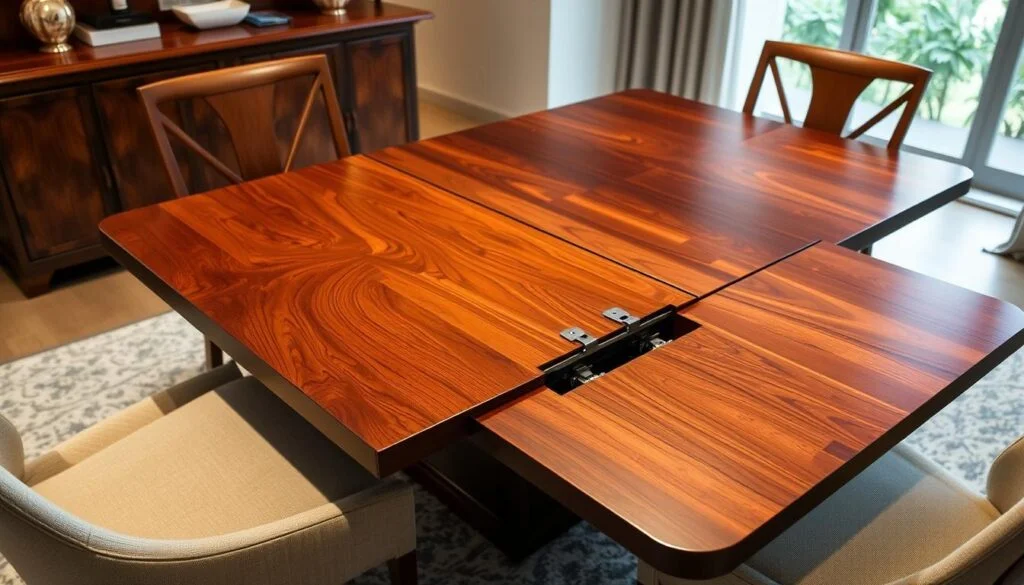
A butterfly-leaf expandable dining table shown extended to seat additional guests — one of the most popular extendable table designs for growing households.
Why an Expandable Dining Table Solves a Real Problem
Most homes don’t have a spare room to store a second, bigger table for special occasions. Space is finite, but guest lists aren’t. That mismatch is exactly why expanding tables have become such a popular category in furniture design over the last decade — they let one piece of furniture do the job of two.
Consider the numbers: the average American home built in the last twenty years has a dining area of roughly 120 to 200 square feet, while family gatherings during holidays regularly exceed the seating capacity most people plan for day-to-day. That gap is precisely why dining table expandable designs exist — not as a luxury, but as a practical response to how homes are actually used.
There’s also a psychological angle worth mentioning. A cramped table changes how people behave at it. Elbows knock, conversation gets awkward, and hosting starts to feel like a logistics exercise instead of a pleasure. A table that can adjust to the moment — six for a Tuesday dinner, ten for a holiday — removes that friction entirely.
Understanding How an Expandable Dining Table Works
Not all expandable dining room tables use the same mechanism, and the differences matter more than most shoppers expect. Here’s a breakdown of the most common types.
Butterfly Leaf Extension
This is the classic mechanism found in traditional and heirloom-style furniture. A hidden leaf folds flat beneath the tabletop and pivots up into place when the two halves of the table are pulled apart. It’s elegant, requires no separate storage, and is a hallmark of a well-built extendable table.
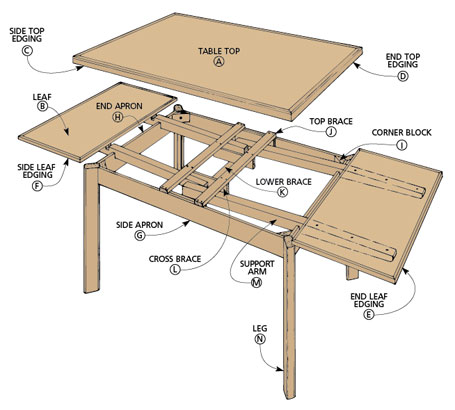
A visual breakdown of how an extendable table mechanism works — the rails, leaf, and slide system that let a table expand and collapse smoothly.
Drop-In Leaf Extension
Here, the tabletop separates into two halves, and a separate leaf (or leaves) is lifted and dropped into the gap. This is common in more affordable adjustable dining tables and tends to require storing the leaf somewhere else in the house when it’s not in use — a closet, under a bed, or in a dedicated slot if the table came with one.
Self-Storing Leaf Systems
Some of the more thoughtfully engineered expanding dining room table designs include a slide-out rail system where the leaf stores inside the table’s understructure. You never have to hunt for a missing piece, which makes this one of the most user-friendly options on the market.
Draw-Leaf and Console-to-Table Conversions
A more compact category, these are expanding tables that start small — sometimes as narrow as a console — and pull apart from both ends to reveal hidden leaves that unfold or slide into place, often doubling or tripling the surface area. These are especially popular in small apartments where every square foot counts.
Choosing the Right Size: A Practical Framework
Sizing is where most people get an expandable dining table purchase wrong. The instinct is to buy “big enough,” but bigger isn’t always better, and the wrong dimensions can make even a well-built table feel awkward in daily use.
A simple rule of thumb used by interior designers: allow 24 inches of table width per seated guest, and at least 36 inches of clearance behind each chair so people can push back and stand without bumping a wall or hutch. For a table that regularly needs to expand from a four-person dinner to an eight-person gathering, look for:
- A closed length of roughly 60 inches (comfortable for four to six)
- An open length of 90 to 108 inches (comfortable for eight to ten)
- A minimum width of 36 to 40 inches so plates, glasses, and serving dishes don’t feel cramped
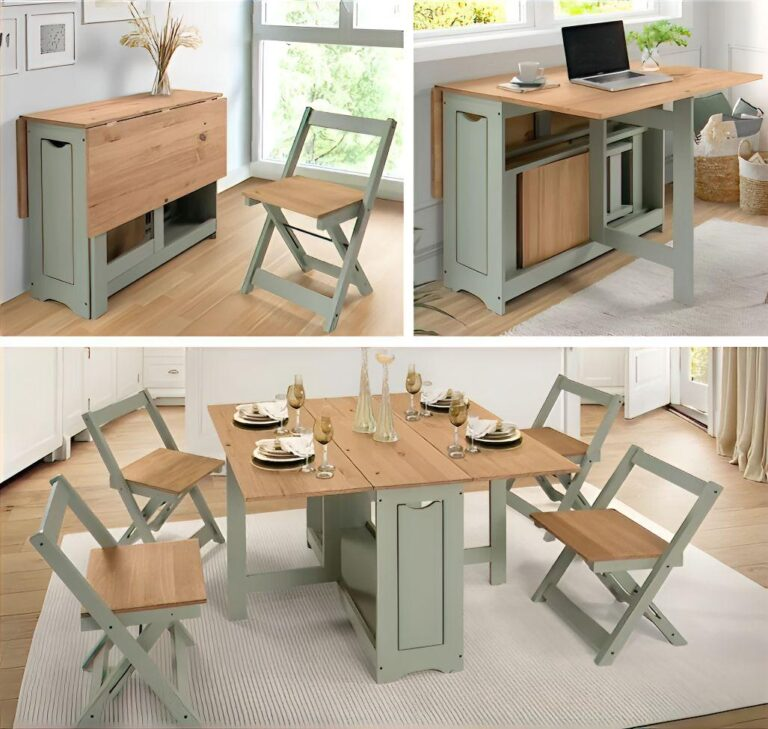
A compact adjustable dining table works well in small apartments, expanding only when the guest list actually calls for it.
If your dining room is small, an adjustable dining table that opens from a round or square shape into an oval or rectangle can be more space-efficient than one that simply gets longer, since round tables tend to fit awkwardly rotated corners better than long rectangles do.
Materials That Actually Hold Up
An expandable dining design puts more mechanical stress on a table than a fixed one — leaves get pulled in and out, hinges get used, and the seams where sections meet need to stay flush over years of use. Material choice matters more here than it does for a table that never moves.
Solid Hardwood
Oak, walnut, and maple are the gold standard for any extendable table because solid wood resists warping at the leaf seams and can be refinished if it gets scratched over decades of use. It’s also heavier, which sounds like a downside until you realize that a heavier table is a more stable one when you’re sliding leaves in and out.
Engineered Wood with Veneer
A budget-friendlier option, engineered wood cores with a hardwood veneer on top can look nearly identical to solid wood at a lower price point, though they’re generally less forgiving of moisture and less repairable if the surface is damaged.
Metal-Framed Extension Systems
Some modern expanding table designs use metal rails and gliders beneath a wood or glass top, which tends to make the extension mechanism smoother and more durable over time, since metal doesn’t expand and contract with humidity the way wood can.
Custom Options: When Off-the-Shelf Doesn’t Fit
Sometimes a dining room simply isn’t a standard shape, or a household has very specific seating needs — a wheelchair user who needs particular clearance, a family that regularly hosts fourteen people, or a narrow galley-style dining space that needs an oddly proportioned table. This is where a custom extendable dining table earns its higher price tag.
Custom builders can adjust:
- The exact closed and open lengths to match a room’s real dimensions
- Leaf count and width, so the table grows in smaller or larger increments
- Wood species, stain color, and edge profile to match existing furniture
- Leg and base style, including trestle, pedestal, or traditional four-leg designs
Several furniture makers specialize in this space, and james and james dining tables is one name that regularly comes up among people researching custom, made-to-order wood furniture — worth a look if you want a table built around your room rather than the other way around, though it’s always smart to compare a few custom furniture makers before committing, since lead times and pricing structures can vary significantly.
Common Mistakes People Make When Buying
- Measuring the table but not the room’s traffic paths. A table can technically fit a room and still make it impossible to walk around when fully extended.
- Ignoring leaf storage. Drop-in leaves need somewhere to live. If there’s no coat closet or storage nearby, a self-storing mechanism is worth the extra cost.
- Underestimating weight. Solid wood expandable dining room tables can be genuinely heavy once extended, which matters if the table will be moved often or if flooring is delicate.
- Choosing style over mechanism quality. A beautiful table with a stiff, hard-to-operate extension mechanism becomes a source of daily frustration rather than a convenience.
- Skipping a test-extend in showrooms. If possible, physically operate the extension before buying — smoothness varies enormously between brands even at similar price points.
Styling an Expandable Dining Table Through the Seasons
One underrated benefit of an expanding dining room table is how it changes the character of a room throughout the year. Closed, it can anchor an intimate breakfast nook. Opened for a holiday dinner, the same table becomes the centerpiece of a much larger gathering. A few practical styling notes:
- Use a table runner instead of a full tablecloth on days the table is only partially extended, so the proportions still look intentional.
- Keep a matching leaf finish so an extended table doesn’t reveal an obvious color mismatch at the seams — this is a common complaint with lower-quality adjustable dining tables.
- Pair with stackable or foldable chairs for the expanded configuration, so extra seating doesn’t need to live in the room year-round.
Caring for the Extension Mechanism
Longevity comes down to maintenance more than most people expect. A few habits keep any dining table expanding mechanism working smoothly for years:
- Wax or lightly lubricate wooden glide rails once or twice a year, especially in humid climates
- Avoid dragging the table across the floor while extending or closing it, which puts uneven pressure on the mechanism
- Store leaves flat and away from direct sunlight or heating vents to prevent warping
- Tighten any visible hardware (bolts, brackets) annually, since normal use can loosen them gradually
Frequently Asked Questions
What is the difference between an expandable dining table and an extendable table?
In practice, the terms are used interchangeably by most furniture retailers. Both describe a table that changes size using leaves or sliding sections. Some brands use “expandable” for tables that open in multiple directions and “extendable” for those that simply lengthen, but there’s no strict industry standard.
How much extra space do I need for an expandable dining table?
Beyond the table’s fully open dimensions, plan for at least 36 inches of clearance on all sides so chairs can slide out comfortably. If the room can’t accommodate the fully extended length with that clearance, consider a table with a smaller maximum size or one that expands in width rather than length.
Are expandable dining room tables sturdy enough for daily use?
Yes, when well made. Solid wood construction with a quality extension mechanism — dovetail joints, metal glide rails, or reinforced butterfly leaves — can be just as sturdy as a fixed table. Sturdiness issues usually come from budget mechanisms rather than the concept of expansion itself.
Can I get a custom extendable dining table built to my exact room size?
Yes. Custom furniture makers can build a table to match a room’s precise dimensions, adjust leaf count, and match existing wood finishes. This route typically costs more and takes longer to deliver than buying off the shelf, but it solves the problem of oddly shaped or unusually small dining rooms.
What’s the easiest type of expanding table mechanism to operate alone?
Self-storing leaf systems and butterfly leaf tables are generally the easiest for one person to operate, since nothing needs to be lifted or carried from another room. Drop-in leaf systems usually require two people, especially with larger, heavier leaves.
Do adjustable dining tables come in round or oval shapes, or just rectangles?
Round and oval options are widely available. Many round tables expand into an oval shape as leaves are added, which some homeowners prefer because it keeps corner seating comfortable even when the table is fully extended.
How long do expandable dining tables typically last?
A well-built solid wood table with proper care can last several decades, often becoming a piece that gets passed down or refinished rather than replaced. Cheaper engineered wood versions tend to have a shorter functional lifespan, particularly at the extension seams.
Is it worth paying more for a table with a smoother extension mechanism?
Generally, yes. A stiff or awkward mechanism becomes a daily annoyance, especially in households that use the expansion feature often rather than just once or twice a year. Testing the mechanism in person, or reading detailed reviews that specifically mention ease of extension, is worth the extra research time.
Final Thoughts
A dining table is one of the few pieces of furniture that has to work for ordinary Tuesdays and extraordinary holidays alike, and that’s a tall order for anything fixed in size. The appeal of a well-made expandable dining table is that it doesn’t force a compromise between the two — it simply becomes whatever the day calls for, whether that’s an intimate dinner for two or a table full of family passing dishes back and forth. Take the time to measure the room honestly, test the mechanism before buying, and choose materials built to handle years of leaves going in and out. Get those details right, and the table stops being a piece of furniture you think about at all — it just works, every time the guest list changes.