

What if you could give that old, scuffed dresser sitting in your bedroom a jaw-dropping makeover without once touching a piece of sandpaper? Sounds too good to be true — but painting furniture without sanding is not only possible, it’s becoming the go-to approach for DIY enthusiasts across the country. Whether you’re a complete beginner or someone who’s refinished a piece or two before, skipping the grit paper doesn’t mean skipping quality.
The old-school belief was that sanding was non-negotiable — that without it, paint would peel in weeks or look lumpy by morning. But modern paint chemistry has completely rewritten the rules. Today’s formulas are engineered specifically to bond to slick, finished, even glossy surfaces with almost zero prep. That’s a game-changer for anyone who wants to repaint furniture quickly, cleanly, and without breathing in a cloud of sawdust.
In this guide, you’ll get the full picture: which paints actually work, how to paint wood furniture the right way without a single swipe of sandpaper, how to tackle tricky pieces like a painted dresser or a dining table, and which mistakes to avoid so your finish lasts for years. Let’s get into it.
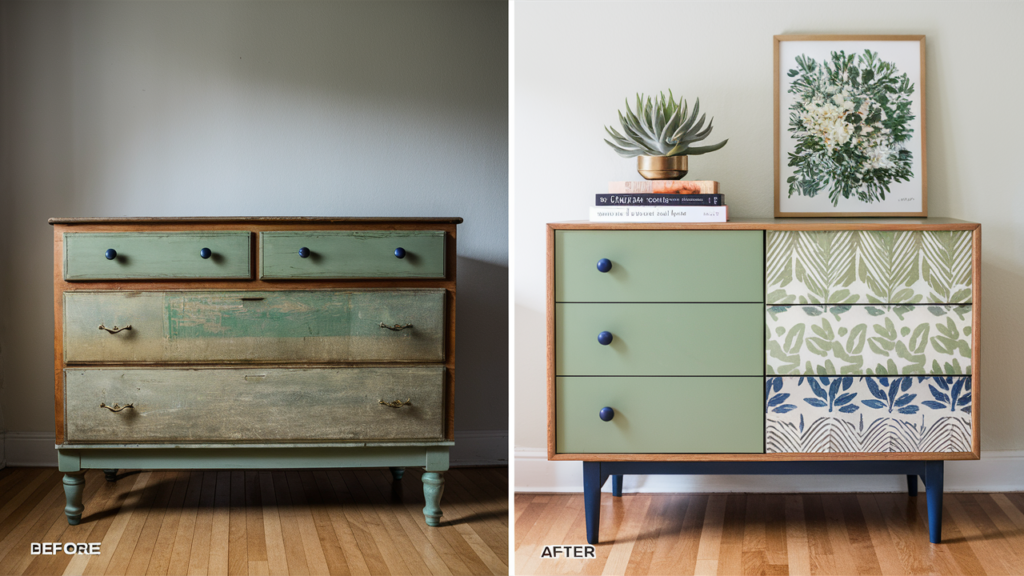
A stunning before-and-after dresser transformation — achieved entirely without sanding, using chalk paint and a bonding primer. Old, scuffed wood becomes a fresh, statement piece in just a weekend.
Why So Many People Avoid Sanding — And Why They’re Right
Let’s be honest. Sanding furniture is one of the most tedious, messy, and physically demanding parts of any furniture project. You need the right grit progression, a steady hand, proper ventilation, and hours of elbow grease — all before you’ve applied a single drop of paint. For renters, apartment dwellers, or anyone without a dedicated workshop, it’s simply not practical.
And beyond inconvenience, over-sanding can actually damage furniture. Thin veneer pieces — which make up a huge portion of modern and flat-pack furniture — can be ruined by aggressive sanding. Go too deep on a veneer dresser and you’ve destroyed the surface you were trying to improve. This is a risk that no sanding furniture paint entirely removes from the equation.
The good news? When you use the correct products and follow the right preparation steps, paint wood furniture without sanding is perfectly achievable with a finish that’s durable, beautiful, and long-lasting. The secret lies not in skipping preparation entirely, but in substituting smart chemistry for mechanical abrasion.
The Science Behind No-Sand Painting
Traditional paint formulas needed a “tooth” — a roughened surface texture that gave the paint something to grip onto. Sanding created that texture mechanically. But modern adhesion primers, chalk-style paints, and mineral paints are designed to penetrate and bond at a molecular level, bypassing the need for physical roughening altogether. Some products even include built-in bonding agents that slightly etch the surface chemically, giving excellent grip without a single scratch.
When you understand this, the concept of painting wood without sanding stops feeling like a shortcut and starts feeling like what it actually is: a smarter, more efficient method backed by chemistry and materials science.
What Paints Work Best for Painting Furniture Without Sanding
Not every paint is created equal when it comes to no-sanding projects. Using the wrong product is the number-one reason people get peeling, chipping results. Here’s a breakdown of the best paint for wood furniture without sanding:
Chalk Paint
This is the undisputed king of the no-sand world. Chalk paint — popularized by brands like Annie Sloan and Rust-Oleum Chalked — has an ultra-matte, porous formula that adheres to nearly any surface, including sealed wood, laminate, and previously painted furniture. It requires no primer on most surfaces, dries quickly, and is exceptionally easy to distress for a vintage look. If you want to know what paint to use on wood furniture without sanding, chalk paint is your answer for 90% of projects.
Mineral Paint
Mineral paints like Fusion Mineral Paint are another excellent no-sand option. They have a built-in topcoat, meaning you often don’t need to apply a separate sealer. The formula bonds extremely well to painted wood finish surfaces and cures to a hard, durable finish. It’s ideal for high-traffic pieces like kitchen tables and chairs.
Bonding Primer + Regular Paint
If you want to use a standard latex or oil-based paint, you can still avoid sanding by using a high-quality no sanding primer first. Products like Zinsser Bulls Eye 1-2-3 or Rust-Oleum Clean Metal Primer are formulated specifically for slick, glossy, or previously finished surfaces. Once the bonding primer is down, you can apply virtually any paint for furniture on top.
All-in-One Furniture Paint
Brands like Dixie Belle, Beyond Paint, and Amy Howard One Step are specifically marketed as no prep furniture paint — they combine primer, paint, and sometimes topcoat into a single product. These are ideal if you want a truly simplified process with minimal steps. Many of these products are what people mean when they search for furniture paint that doesn’t require sanding.
STEP-BY-STEP: HOW TO PAINT FURNITURE WITHOUT SANDING
| 1 | 2 | 3 | 4 | 5 | 6 |
| Clean the Surface Thoroughly | Apply Liquid Deglosser | Use Bonding Primer (if needed) | Paint in Thin Even Coats | Allow Full Dry Time | Seal with Topcoat or Wax |
How to Paint Furniture Without Sanding: Full Step-by-Step Method
Here’s exactly how to paint furniture without sanding — from start to finish. Follow these steps and you’ll get professional-looking results even if this is your very first furniture project.
Step 1 — Clean the Piece Completely
This is the most important step when you’re skipping sanding. Any grease, wax, dust, or grime on the surface will act as a barrier between the paint and the wood, causing adhesion failure. Use a degreaser like TSP (trisodium phosphate) substitute or a simple mixture of warm water and dish soap. For antique or thrift-store pieces, pay special attention to carved edges and drawer runners where old wax tends to collect.
Step 2 — Use a Liquid Deglosser
A liquid deglosser — also called liquid sandpaper or liquid prep — is the chemical substitute for sanding when you’re dealing with shiny, sealed, or lacquered surfaces. Products like Krud Kutter Gloss-Off or Klean-Strip Liquid Sandpaper chemically dull the surface, creating the adhesion “tooth” that sanding would have provided mechanically. If you’re wondering how to paint glossy furniture without sanding, a deglosser is your best tool. Apply it with a rag, wipe off the residue, let it dry fully, and you’re ready to paint.
Using a deglosser is especially critical if you’re working on painting over painted furniture without sanding or refinishing a piece that has multiple old coats of paint or lacquer on it. Don’t skip this when the existing finish is very smooth or shiny.
Step 3 — Apply Bonding Primer (When Necessary)
If you’re using chalk paint or a mineral-based all-in-one product, you may be able to skip primer entirely. But for projects involving very slick laminate, melamine, or high-gloss factory finishes — especially on pieces like IKEA furniture or flat-pack bedroom sets — a coat of furniture primer no sanding formula will make a big difference. Apply a thin, even coat, allow it to dry fully per the manufacturer’s instructions, and lightly tack it off with a dry cloth before painting.
Step 4 — Apply Your Paint in Thin Coats
Thin coats are always better than one thick coat. This is true for any paint project, but especially important when painting wood furniture without sanding because thick coats are more likely to sag, drip, or develop brush marks that are difficult to fix without the option to sand between coats. Two to three thin coats, each fully dry before the next is applied, will almost always deliver a smoother finish than one heavy coat.
For a painted dresser or painting a dresser without sanding, use a quality synthetic brush for detailed areas and a small foam roller for flat drawer fronts and large panels. The roller dramatically reduces visible brush strokes and gives a more factory-smooth finish.
Step 5 — Seal the Finish
Once your paint is fully cured (not just dry — fully cured, which can take 24–72 hours depending on the product), protect it with a topcoat. For chalk paint, a clear furniture wax or polycrylic finish is standard. For mineral paints, the built-in topcoat may be sufficient for low-traffic pieces, but a separate topcoat is always a good idea for paint wood furniture that sees daily use, like a kitchen or dining table.
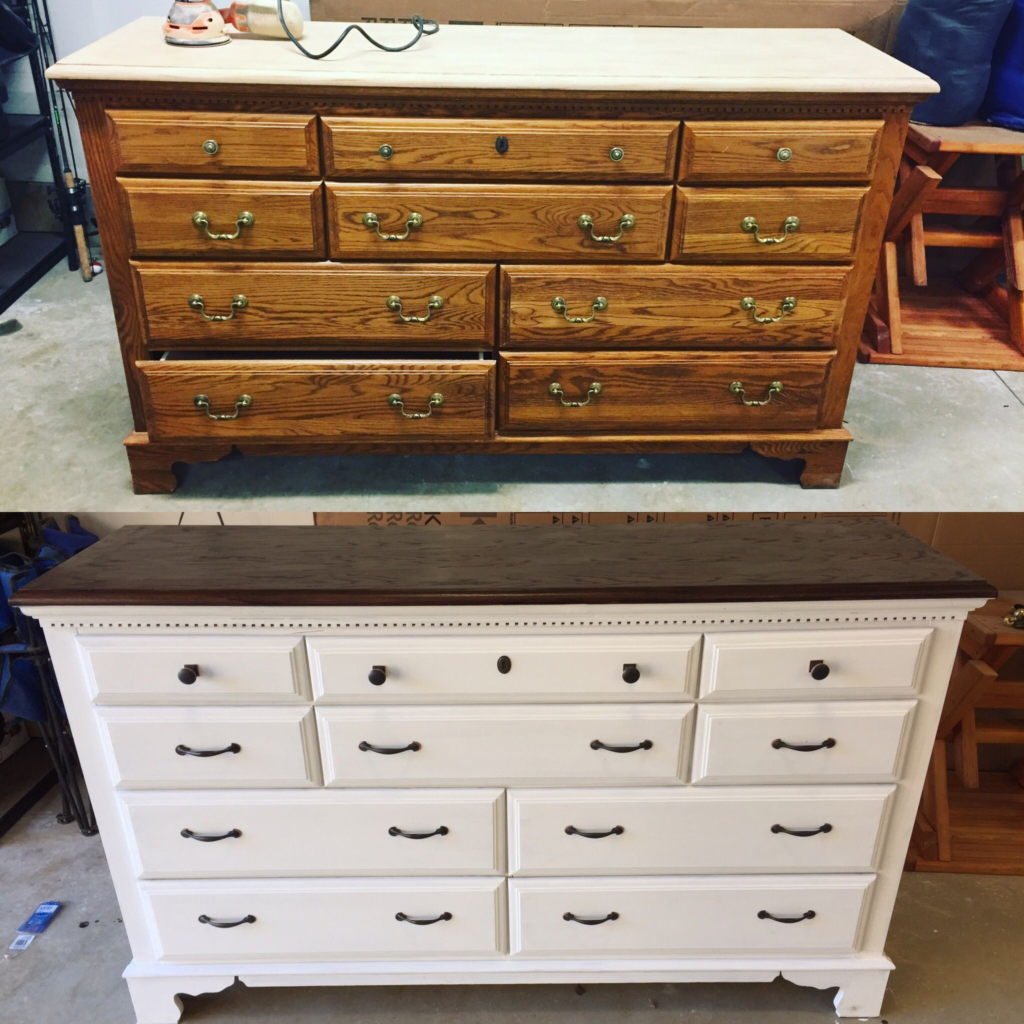
Chalk paint being applied with a quality synthetic brush directly onto cleaned, deglossed wood — no sandpaper needed at any stage. Thin, even strokes ensure a smooth, streak-free finish.
How to Paint a Dresser Without Sanding: Room-by-Room Guide
Different furniture types have specific quirks that are worth knowing before you start. Here’s how to handle the most common projects.
How to Paint a Dresser Without Sanding
A dresser is the single most popular furniture painting project for good reason — a fresh coat of paint can completely transform a bedroom. To paint a dresser without sanding, remove all the hardware and drawers first. Paint the main carcass (the body of the dresser) separately from the drawer fronts. This lets you paint all sides of each drawer front properly, which prevents the drawers from sticking once the paint dries and builds up on the edges. Apply two coats of chalk paint or a mineral paint with a brush-and-roller combo, then reinstall the drawers and add new hardware for an instant upgrade.
If you’re wondering can you paint cheap furniture — yes, absolutely. Even laminate-finished pieces from budget retailers respond extremely well to chalk paint with a light deglosser prep. Many people have successfully transformed IKEA HEMNES and MALM dressers this way.
How to Paint a Wooden Table Without Sanding
Tables take more abuse than dressers, so durability is the priority here. For how to paint a wooden table without sanding — or a dining room table specifically — a mineral paint with built-in topcoat is your safest bet. If you go the chalk paint route, you’ll want two to three coats of a durable water-based polyurethane on top. Make sure to degrease the table surface thoroughly first, as kitchen and dining tables often have invisible grease and food oils that will wreck paint adhesion if not removed.
How to Paint a Bed Frame Without Sanding
Bed frames often have turned spindles, carved details, and hard-to-reach areas. A small artist’s brush and chalk paint work beautifully for these intricate areas. For the larger flat surfaces, a foam roller speeds things up. Make sure all joints and crevices are cleaned thoroughly, and don’t over-load your brush — thin coats matter even more on vertical surfaces like bed frame posts where drips are very visible.
How to Paint Wooden Chairs Without Sanding
Chairs are fiddly because of their many angles, spindles, and undersides. Spray paint is actually one of the most practical approaches for painting wood furniture with complex shapes. How to spray paint furniture without sanding: apply the same deglosser prep, then use a spray chalk paint or Rust-Oleum spray primer+paint combo, applying multiple thin passes from about 12 inches away. This gets into all the tight spots that a brush would miss and delivers an even finish without brush marks.
How to Paint Dark Furniture White Without Sanding
Going from dark to light is always the trickiest color change in furniture painting. For how to paint dark furniture white without sanding, a grey or white tinted bonding primer applied first is essential — it blocks the dark color from bleeding through and reduces the number of white topcoats needed (typically from four or five down to two or three). Products like Zinsser B-I-N shellac-based primer are particularly powerful for this scenario, even without sanding.
How to Paint Glossy Furniture Without Sanding
Factory lacquered or high-gloss polyurethane finishes are the most challenging surfaces for no-sand painting. The key to how to paint glossy furniture without sanding is a two-step chemical prep: first a thorough deglossing wipe-down, then a bonding primer. Do NOT skip the bonding primer on high-gloss surfaces. Even chalk paint — which adheres to almost everything — benefits from a primer when the surface is extremely glossy.
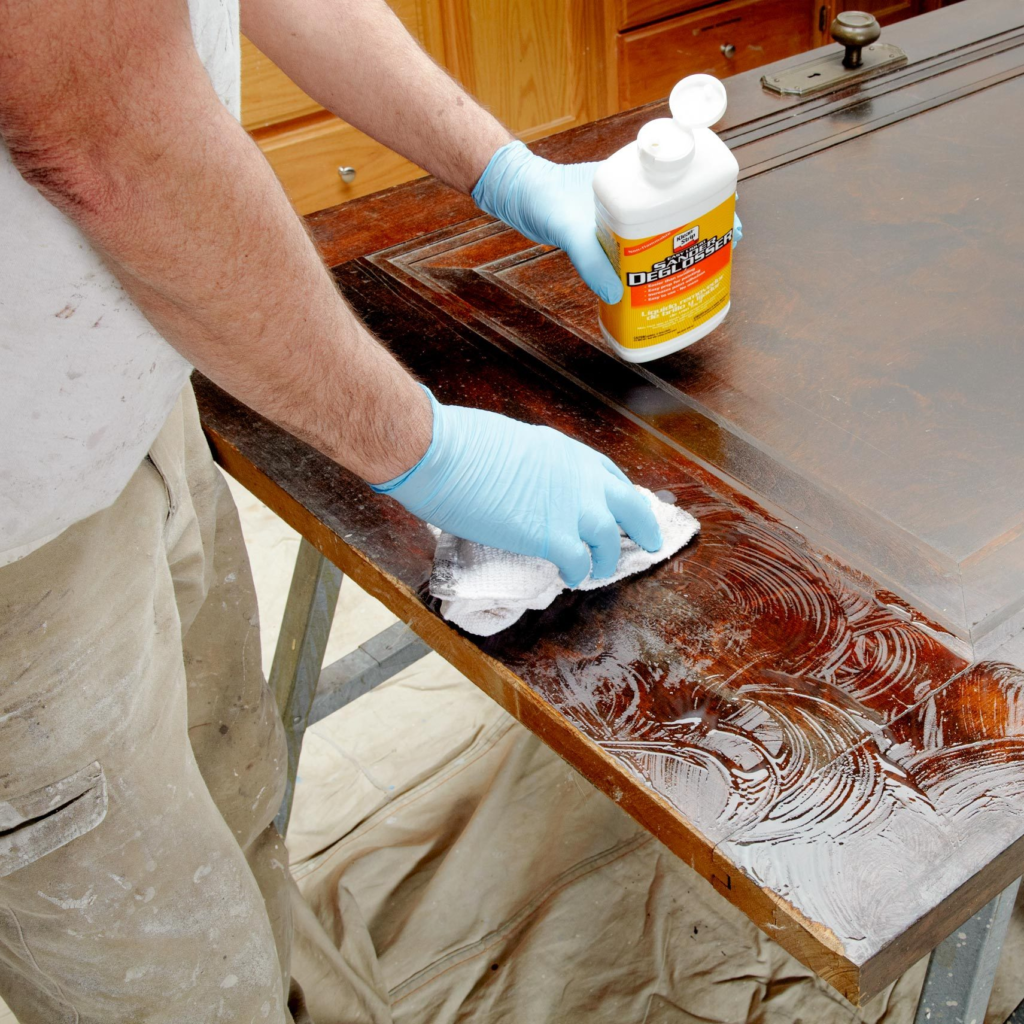
Liquid deglosser (liquid sandpaper) being wiped onto a glossy furniture surface with a clean rag — the single most important chemical prep step that makes no-sanding painting possible on sealed and lacquered finishes.
Paint Type Comparison: Which is Right for Your Project?
| Paint Type | Needs Primer? | Durability | Best For | Topcoat? |
| Chalk Paint | Usually No | Medium | Dressers, cabinets, decorative pieces | Yes (wax/poly) |
| Mineral Paint | Usually No | High | Tables, chairs, high-traffic pieces | Optional |
| All-in-One Paint | No | Medium-High | Quick makeovers, beginners | No |
| Bonding Primer + Latex | Yes (bonding) | High | Glossy or laminate surfaces | Yes |
| Spray Paint | Depends | Medium | Chairs, frames, detailed pieces | Depends |
Painting Furniture Without Sanding or Priming: Is It Really Possible?
This is one of the most searched questions in the DIY space, and the answer is: yes, in specific circumstances. How to paint furniture without sanding or priming is genuinely achievable when you use chalk paint or an all-in-one paint formula on a surface that’s been thoroughly cleaned and deglossed. On bare wood, lightly finished wood, or previously chalk-painted surfaces, you can often go straight to paint with excellent results.
However, “without sanding or priming” doesn’t mean “without preparation.” You still need to clean and degrease the surface. And on very slick, shiny, or non-porous surfaces — think melamine, lacquer, or metal — skipping the primer is a gamble that will often result in peeling within weeks. Paint without sanding or priming is the goal, but knowing when that’s safe versus risky is part of becoming a skilled DIY painter.
💡 Pro Tip: If you’re unsure whether your surface needs a primer, do a simple adhesion test. Paint a small hidden area, let it cure for 24 hours, then press a piece of masking tape firmly onto it. Peel the tape off quickly. If any paint comes with it, you need a bonding primer. If the paint stays, you’re good to go without priming.
Common Mistakes to Avoid When Painting Furniture Without Sanding
Even experienced painters make these errors when first switching to a no-sand method. Knowing about them in advance will save you a lot of frustration.
- Skipping the cleaning step: This is the most common cause of peeling and adhesion failure. Even furniture that looks clean has invisible residue that blocks paint adhesion. Always clean thoroughly.
- Applying coats too thick: Thick coats trap moisture, slow drying, and are prone to cracking and peeling as the paint cures unevenly. Thin coats always.
- Not allowing full dry time between coats: “Dry to touch” and “dry enough for a second coat” are different things. Check the manufacturer’s recoat time and stick to it.
- Using the wrong brush: Cheap brushes leave obvious bristle marks. For DIY furniture paint projects, invest in a quality synthetic brush — it will pay for itself in finish quality.
- Skipping the topcoat on high-use pieces: Chalk paint in particular is very susceptible to water rings, scratches, and scuffs without a protective topcoat. Always seal pieces that will see regular use.
- Ignoring humidity and temperature: Paint behaves differently in cold, hot, or humid conditions. Most latex and chalk paints need to be applied between 50°F and 90°F (10°C–32°C) to cure properly.
Painting Specific Colours: White, Black, and Beyond
How to Paint Wood Furniture White Without Sanding
White furniture is perennially popular for its clean, bright, airy aesthetic, but it’s one of the more demanding colour changes. For how to paint wood furniture white without sanding, start with a grey-tinted bonding primer that neutralises any existing dark colour. Then apply your white chalk or mineral paint in two thin coats. A third coat may be needed for full opacity. Finish with a water-based polycrylic in a flat or matte sheen to protect the white without yellowing over time.
How to Paint Furniture Black Without Sanding
Black is much more forgiving than white in terms of colour coverage. For how to paint furniture black without sanding, a single coat of quality black chalk paint over a clean, deglossed surface is usually sufficient for full opacity. Two coats guarantee depth and richness. A matte black finish with a flat topcoat is a particularly striking and modern look for bedroom furniture and home office pieces.
Painting Bedroom Furniture for a Complete Room Refresh
One of the most rewarding applications of painting bedroom furniture is creating a cohesive, matchy set from mismatched or worn pieces. By painting your dresser, bedside tables, and even your bed frame in the same colour or complementary shades, you can achieve a designer-coordinated bedroom look for a fraction of the cost of new furniture. The no-sand method makes this project fast enough to accomplish over a single weekend.
Upcycling and Sustainability: Why Painted Furniture Matters
Beyond aesthetics, there’s a compelling environmental case for refinishing furniture without sanding and giving old pieces a second life. According to the U.S. EPA, furniture and furnishings account for a significant share of household solid waste each year. By choosing to upcycle furniture rather than replace it, you reduce landfill contribution, avoid the carbon cost of manufacturing new goods, and often end up with something that’s genuinely more characterful than what you could buy off the shelf.
The rise of DIY furniture paint culture — driven by social media communities on platforms like Pinterest and Instagram — has made furniture painting more accessible and visually inspiring than ever before. What was once a skill practiced mainly by antique restorers is now embraced by millions of people who see old furniture not as a problem but as a canvas.
Frequently Asked Questions
Can you paint furniture without sanding?
Yes — can you paint furniture without sanding is one of the most common questions for DIYers, and the answer is an enthusiastic yes. Using chalk paint, mineral paint, or an all-in-one formula on a clean, deglossed surface allows you to achieve beautiful, durable results with zero sandpaper required. The key is thorough surface preparation through cleaning and the use of liquid deglosser on shiny surfaces.
What is the best paint to use on furniture without sanding?
The best paint for wood furniture without sanding is chalk paint for most general projects — it has the highest natural adhesion and requires no primer on most surfaces. For high-traffic pieces like tables and chairs, mineral paint (like Fusion Mineral Paint) is the better choice due to its superior durability and built-in topcoat. All-in-one paints like Beyond Paint and Dixie Belle are excellent for beginners who want the simplest possible process.
How do I paint a dresser without sanding?
How to paint a dresser without sanding: Remove all hardware and drawers. Clean the entire piece with a degreaser. Apply liquid deglosser to any shiny areas. Apply two thin coats of chalk paint or an all-in-one furniture paint, allowing full drying time between coats. Seal with a clear wax or water-based polycrylic topcoat. Reinstall drawers and swap in new hardware for a fresh look.
Do I need a primer when painting furniture without sanding?
Not always. When using chalk paint or mineral paint on previously painted or lightly finished wood surfaces, a separate primer is usually unnecessary. However, a no sanding primer (bonding primer) is highly recommended when painting over very shiny lacquer, factory finishes, melamine, or when making a dramatic color change from dark to light. When in doubt, do the tape adhesion test described above.
Can you paint over glossy finished furniture without sanding?
Yes. How to paint glossy furniture without sanding requires a chemical deglosser (liquid sandpaper) plus a bonding primer. The deglosser dulls the glossy surface chemically, and the bonding primer creates a paintable base that latex, chalk, or mineral paint can adhere to reliably. Skipping either of these steps on a very glossy surface will likely result in peeling.
How do I paint cheap laminate furniture without sanding?
Can you paint cheap furniture like IKEA or flat-pack pieces? Absolutely. Clean thoroughly, apply liquid deglosser, then use a bonding primer before applying chalk paint. The bonding primer is the critical step for laminate and melamine surfaces, which are otherwise very slippery for paint. After priming, chalk paint or mineral paint adheres beautifully for a completely transformed look.
Is it possible to paint furniture without sanding or priming?
For surfaces that are already bare wood, lightly finished, or previously painted with non-gloss paint, yes. How to paint furniture without sanding or priming is achievable with chalk paint or all-in-one formulas on these surfaces. Clean and degrease first, always. On slick, shiny, or non-porous surfaces, a bonding primer is strongly recommended even when you’re skipping sanding.
How long does painted furniture last without sanding first?
Painted furniture done without sanding, when properly prepared and sealed, can last just as long as sanded work — five to ten years or more with normal care. The key factors are surface preparation (cleaning and deglossing), the quality of paint used, and the application of a protective topcoat. Skimping on any of these is what shortens the lifespan, not the absence of sanding itself.
Can I spray paint furniture without sanding?
Yes. How to spray paint furniture without sanding follows the same principles as brush painting: clean, degrease, apply deglosser on glossy surfaces, then spray in thin even passes. Spray paint is particularly effective for painting wood without sanding on chairs, frames, and pieces with intricate spindles or carvings where a brush would struggle to reach evenly. Hold the can 10–12 inches from the surface for best results.
What is liquid sandpaper (deglosser) and do I really need it?
Liquid sandpaper — also called liquid deglosser or paint prep — is a chemical solution that dulls glossy or sealed surfaces so paint can adhere without mechanical sanding. For painting without sanding on shiny surfaces, it’s essentially non-negotiable. It’s inexpensive, quick to apply, and makes the difference between a long-lasting finish and one that starts peeling within weeks on slick surfaces.
Final Thoughts
The era of mandatory sanding is over. As this guide has shown, painting furniture without sanding is not only possible — it’s often the smarter, faster, and cleaner way to go. With the right products, a thorough cleaning, and a little patience with dry times, you can transform old bedroom furniture, a battered dining table, a dated dresser, or even cheap flat-pack pieces into something you’re genuinely proud of.
The key takeaways are straightforward: choose a paint that’s built for adhesion (chalk paint and mineral paint lead the pack), clean your surface like you mean it, use a deglosser on shiny surfaces, and always protect your hard work with a topcoat. Beyond that, the creative decisions are entirely yours — whether you’re going for a crisp white, a moody black, a soft sage, or a bold two-tone look, the process is the same.
So pull that old dresser out of the corner, clear some space, and start your next furniture transformation. You don’t need a workshop, you don’t need special skills, and you definitely don’t need sandpaper. Just the right products, a little preparation, and the confidence to start.
Ready to Start Your Furniture Makeover?
Grab your chalk paint, pick up a liquid deglosser, and transform that tired piece of furniture this weekend — no sandpaper, no dust, no drama. Your dream painted furniture is closer than you think.