

If you’ve ever banged your knee on a table leg while trying to squeeze into a dinner seat, you already understand the appeal of a pedestal table before you even know its name. That single, central column of support — instead of four legs scattered around the perimeter — solves one of the most common (and most annoying) problems in dining room design: where do you actually put your legs?
It sounds like a small thing. It isn’t. Anyone who has hosted a holiday dinner with mismatched chairs squeezed around a traditional four-legged table knows exactly how much table legs can get in the way of comfort, conversation, and even where you can physically sit. A modern pedestal table solves this by moving all that structural weight to the center, freeing up the space underneath for knees, chair legs, and the occasional dropped napkin.
This isn’t a new invention — pedestal-style tables have been around for centuries, appearing in everything from Georgian dining rooms to mid-century American kitchens. What’s changed is the design language. Today’s pedestal modern furniture leans into clean lines, mixed materials, and a silhouette that looks just as at home in a minimalist loft as it does in a farmhouse kitchen. Whether you’re renovating a small apartment dining nook or replacing a worn-out family table, understanding how these tables work — and why they’ve become so popular again — can save you from a purchase you’ll regret in six months.
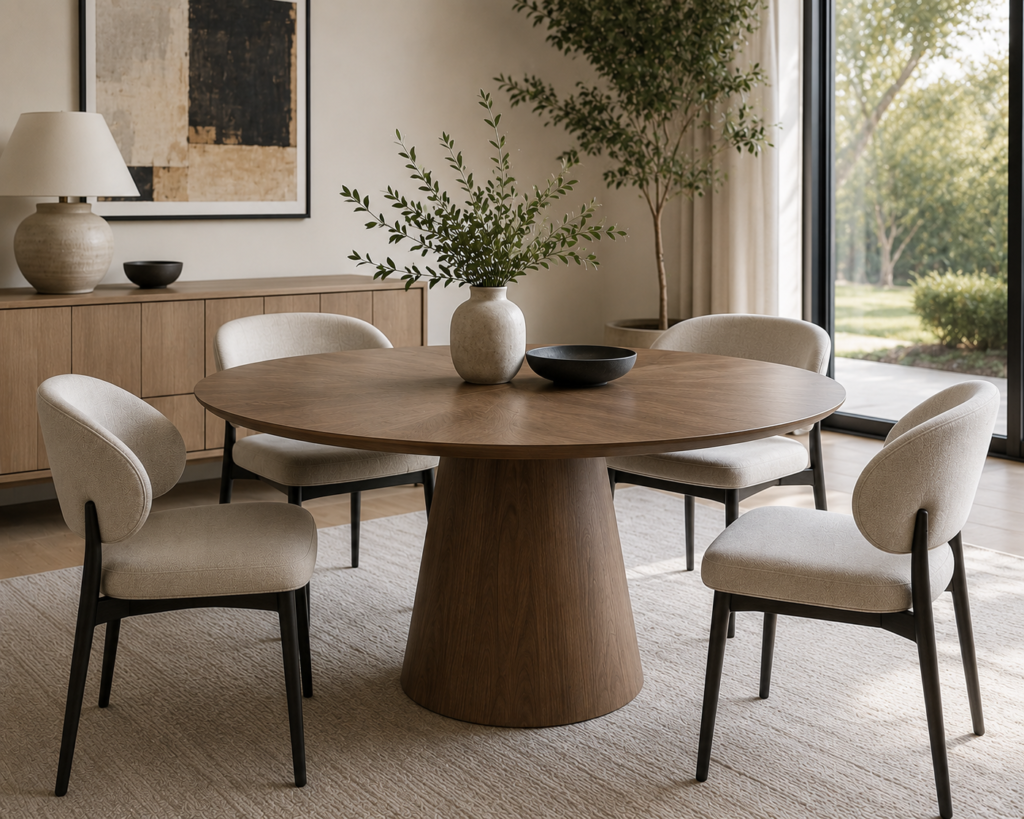
A modern pedestal table brings warmth and clean lines to any dining space, without four legs crowding your seating.
What Exactly Is a Pedestal Table?
A pedestal table is any table supported by a single central base (or occasionally two) rather than four separate legs. The base can be a solid column, a flared trumpet shape, a cross-foot design, or even a sculptural form made from metal, stone, or reinforced wood. The tabletop — round, oval, square, or rectangular — sits on top of this base and is typically bolted or fixed at a central mounting plate for stability.
The engineering matters more than people realize. A well-built pedestal table has to distribute the weight of the tabletop, place settings, and diners’ arms through one central point instead of four corners, which means the base needs to be significantly stronger and better anchored than a standard leg. This is part of why cheaply made pedestal tables sometimes wobble — the base wasn’t engineered to handle the load.
Why People Are Switching From Traditional Four-Leg Tables
There are a few concrete, practical reasons this table style keeps showing up in home renovation searches and interior design features:
- More usable seating space — no corner legs means you can fit more chairs, or squeeze in an extra guest during holidays.
- Easier cleaning — one column is far simpler to sweep and mop around than four legs and stretcher bars.
- Visual lightness — a contemporary pedestal table often looks less bulky in a room, which matters a lot in smaller dining areas.
- Flexible seating arrangements — round and oval pedestal tops don’t force a “head of the table” the way rectangular four-leg tables do.
The Rise of the Modern Pedestal Dining Table
Search around any furniture retailer today and you’ll notice how often the modern pedestal dining table shows up as a featured category. That’s not a coincidence — designers and homeowners have been gravitating toward this style for a mix of aesthetic and functional reasons.
Part of the shift comes from how living spaces have changed. Open-concept homes, smaller urban apartments, and multi-purpose dining rooms all benefit from furniture that feels less visually heavy. A modern pedestal dining table with a slim column base and a light wood or stone top can anchor a room without dominating it the way a chunky farmhouse table with thick legs might.
Material choice plays a big role too. Where older pedestal tables leaned heavily on dark, carved wood, today’s modern pedestal table designs experiment with:
- Matte black or brushed steel bases paired with light oak tops
- Marble or engineered stone tabletops on sculptural pedestal supports
- Two-tone finishes — a white base with a walnut top, for example
- Curved, hourglass-shaped pedestals instead of straight columns
Popular Materials in Contemporary Pedestal Table Design
Different base materials change both the look and the practicality of the table:
- Solid wood bases — warm, classic, and typically the most durable if properly finished, though they can be heavier to move.
- Metal bases — steel or iron pedestals give a sleeker, more industrial look and tend to be lighter than solid wood.
- Stone or concrete composite bases — increasingly common in high-end contemporary pedestal table collections, offering a sculptural, gallery-like feel.
- Engineered wood with veneer — a budget-conscious option that mimics the look of solid wood at a lower price point.
A Brief History of the Pedestal Design
The pedestal base isn’t a modern invention dressed up in new marketing language — it has roots stretching back centuries. Cabinetmakers in 18th-century England popularized the “tripod pedestal” table, a small round-top piece balanced on three splayed legs, often used for tea service or card games rather than full family dining. American colonial furniture makers adapted the idea for larger dining surfaces, and by the mid-20th century, designers working in the modernist movement pushed the concept further, experimenting with single-column steel and fiberglass bases that eliminated legs almost entirely.
That mid-century shift is really where today’s modern pedestal table owes its DNA. Designers were reacting against the cluttered, ornate furniture of previous decades and looking for shapes that felt sculptural, efficient, and honest about their materials. A single, confident pedestal column fit that philosophy perfectly — it did the structural job without pretending to be anything decorative.
Fast forward to today, and that same design logic still holds. Homeowners aren’t necessarily chasing a specific decade’s aesthetic when they shop for a contemporary pedestal table — they’re responding to the same practical appeal that attracted mid-century designers: simplicity, function, and a base that doesn’t fight for visual attention with everything else in the room.
Budget Considerations: What Actually Affects the Price
Pedestal tables span a wide price range, and understanding what drives that range can help you avoid overpaying for style you don’t need or underpaying for stability you do need.
- Base material — solid hardwood and natural stone pedestals cost significantly more than engineered wood or powder-coated steel.
- Tabletop material — marble, granite, and thick solid-wood slabs raise the price considerably compared to laminate or veneer tops.
- Construction complexity — a simple straight column is cheaper to manufacture than a flared, curved, or multi-piece sculptural base.
- Brand and craftsmanship — hand-finished or small-batch furniture makers typically charge more than mass-produced retail lines, though quality can vary either way.
- Extendable mechanisms — a pedestal table with a built-in extension leaf usually costs more than a fixed-top version of similar size.
If budget is a primary concern, look for a pedestal leg dining table with an engineered wood base and laminate top — these can offer 80–90% of the visual impact of a solid wood or stone version at a fraction of the price, as long as the manufacturer has built the base to properly support the tabletop’s weight.
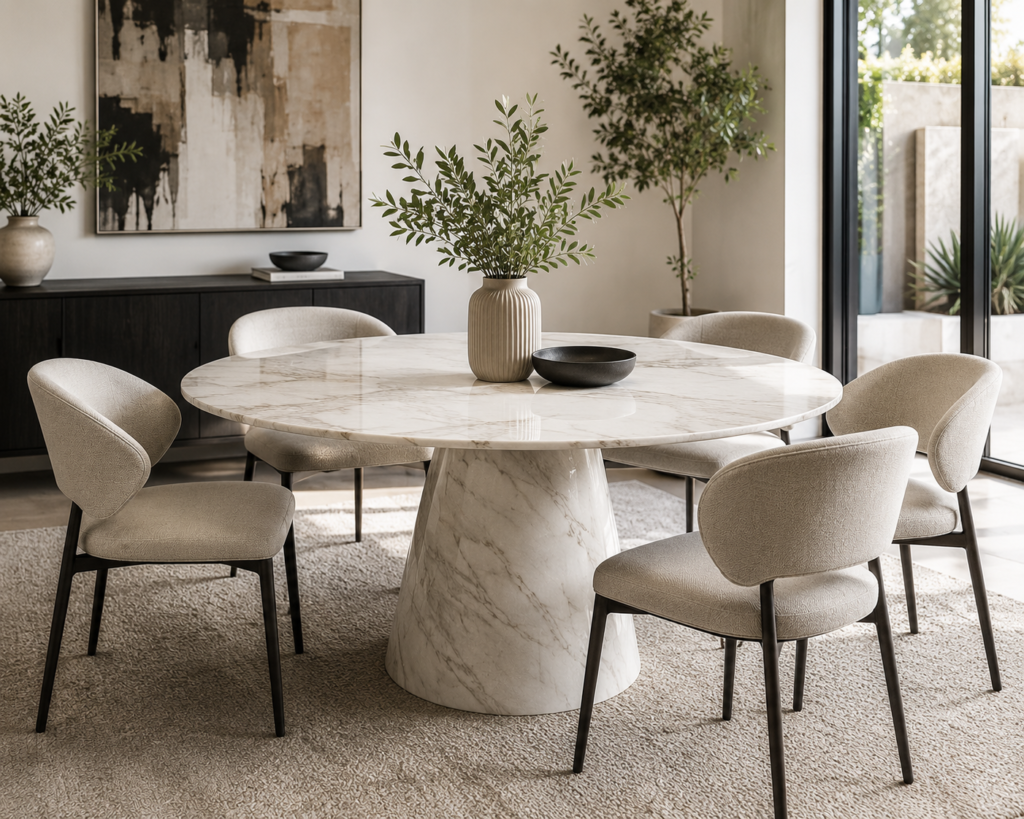
A contemporary pedestal table in marble makes a sculptural statement while keeping the base out of the way of chair legs.
Pedestal Table vs. Traditional Leg Table: A Practical Comparison
It helps to see the differences side by side, especially if you’re trying to decide between a pedestal table modern design and a classic four-leg table for your next furniture purchase.
| Feature | Pedestal Table | Traditional Four-Leg Table |
|---|---|---|
| Legroom | Generally more open underneath | Corner legs can restrict seating |
| Seating flexibility | Easier to add extra chairs | Fixed by leg placement |
| Visual weight | Often appears lighter | Can look bulkier |
| Stability | Depends on base engineering | Generally very stable if well built |
| Cleaning | Simpler, fewer obstructions | More legs to clean around |
| Style range | Works well in modern and transitional spaces | Works well in classic, farmhouse spaces |
Neither style is objectively “better” — it depends on your room size, your household’s needs, and the look you’re going for. But for anyone struggling with a cramped dining area, a pedestal leg dining table is frequently the more practical solution.
How to Choose the Right Pedestal Table for Your Space
Buying furniture online, or even in-store, can be deceiving. A table that looks proportionate in a showroom photo might completely overwhelm — or underwhelm — your actual dining room. Here’s how to approach the decision methodically.
1. Measure Your Room, Not Just the Table
Leave at least 36 inches of clearance between the table’s edge and any wall or furniture piece so chairs can slide out comfortably. For a modern pedestal design, also account for the base’s footprint — some flared or trumpet-style pedestals extend wider at the floor than you’d expect from the tabletop size alone.
2. Match the Shape to Your Room’s Layout
- Round tops work best in square rooms or smaller spaces, since they avoid awkward corner gaps.
- Oval tops suit narrow, rectangular rooms and can seat more people along the length.
- Square tops fit tight breakfast nooks and casual eating areas.
3. Check the Base’s Weight Capacity and Stability
This is the step people skip — and regret. Because a pedestal table relies on one central support instead of four, ask the retailer (or check the product specs) for the tabletop’s maximum recommended weight and whether the base includes a wide floor plate or cross-foot design for added stability. Wobbling is almost always a sign of an undersized or poorly weighted base, not a flaw in the pedestal concept itself.
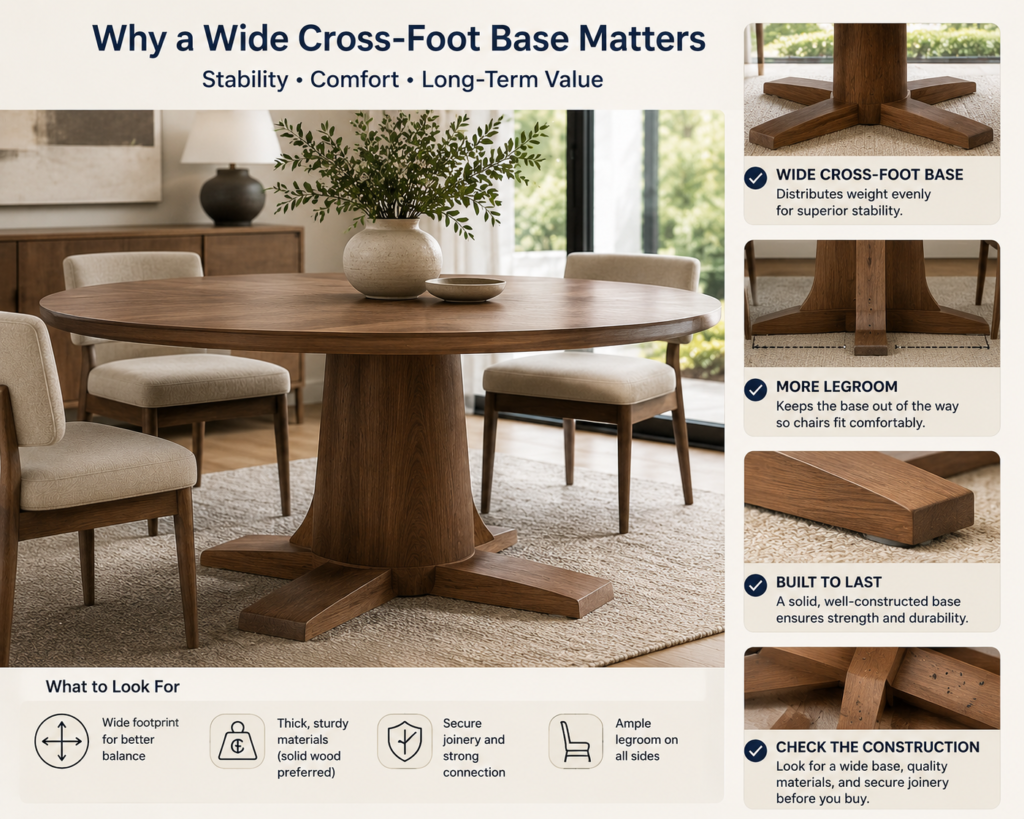
A wide cross-foot base like this one adds stability — always check base construction before buying a pedestal leg dining table.
4. Decide on Material Based on Lifestyle
Households with kids or frequent entertaining may want a contemporary pedestal dining table with a durable quartz or laminate top that resists scratches and spills, while households prioritizing warmth and long-term investment often lean toward solid wood.
Styling Ideas: Making Your Pedestal Table the Centerpiece
Because a pedestal table naturally draws the eye toward its base, it pairs beautifully with statement lighting and layered textures above and around it.
A few styling approaches that consistently work well:
- Pendant lighting directly above the table — since there’s no cluttered leg structure below, a single dramatic pendant or a cluster of three smaller fixtures complements the clean lines of a pedestal modern base.
- Mixed seating — pairing upholstered chairs on two sides with wooden or metal chairs on the others adds visual interest without competing with the table’s minimalist base.
- A textured rug underneath — a jute, wool, or patterned rug helps ground the table visually, especially with slimmer metal-based designs.
- Open shelving or a sideboard nearby — balances the room since pedestal tables tend to leave more visible floor space.
Small Space Solutions
For apartments or compact dining nooks, a round modern pedestal table with a 42- to 48-inch diameter is often the sweet spot — big enough for four place settings comfortably, small enough to avoid overwhelming the room. Extendable pedestal tables, which include a leaf that expands the tabletop while the base stays central, are also worth considering if you regularly host but don’t have room for a permanently large table.
Common Problems (and How to Solve Them)
No furniture style is flawless, and it’s worth addressing the concerns people actually run into after buying a pedestal-based table.
“My Table Wobbles”
This is almost always caused by an uneven floor or a loose mounting bolt between the tabletop and base, not a design flaw in the pedestal table concept itself. Most bases include adjustable leveling feet — check these first before assuming the table is defective.
“It Doesn’t Feel Sturdy With a Lot of Weight”
Heavier stone or glass tops need a base rated for that load. If you’re shopping for a contemporary pedestal table with a marble or quartz surface, confirm the manufacturer has engineered the base specifically for that material’s weight — not every base is interchangeable across tabletop types.
“I’m Worried About Kicking the Base”
Choose a pedestal with a compact cross-foot rather than a wide, splayed base if your household includes young kids who tend to kick or bump into furniture while eating.
“I’m Not Sure How to Clean or Maintain It”
Maintenance depends on the base material. Wood pedestals should be dusted regularly and treated with furniture polish or oil every few months to prevent drying and cracking, especially in homes with central heating or dry climates. Metal bases generally just need a damp cloth to avoid fingerprint smudges, while stone or composite pedestals benefit from an occasional wipe with a pH-neutral cleaner to avoid dulling the finish. None of this is particularly demanding — one of the quieter advantages of a pedestal table is that, with one central support instead of four legs and stretcher bars, there’s simply less surface area to maintain in the first place.
Frequently Asked Questions
Is a pedestal table sturdier than a four-leg table?
It depends on construction quality rather than the style itself. A well-engineered pedestal table with a solid, properly weighted base can be just as stable as a four-leg table, while a poorly made one of either style can wobble.
What size room works best for a pedestal table?
Small to medium dining rooms typically benefit the most, since a modern pedestal dining table frees up floor space that four corner legs would otherwise occupy, making the room feel more open.
Can a pedestal table seat more people than a regular table?
Often, yes. Because there are no corner legs blocking chair placement, a contemporary pedestal table can usually accommodate an extra chair or two compared to a similarly sized four-leg table.
Are pedestal tables good for kitchens with kids?
Yes, particularly round or oval styles. The single central base means fewer sharp corners and less risk of little ones bumping into legs while moving around the kitchen.
What materials are best for a modern pedestal table base?
Metal and solid wood are the most durable choices, while engineered stone composites offer a high-end look for a pedestal table modern aesthetic without the cost of solid natural stone.
Do pedestal tables come in extendable designs?
Many do. Extendable pedestal tables include a leaf mechanism that expands the tabletop surface while keeping the same central base, making them practical for households that host occasionally but want a smaller everyday footprint.
How do I stop my pedestal table from wobbling?
Check the leveling feet at the base first, then confirm the mounting bolts connecting the tabletop to the base are fully tightened. Uneven flooring is the most common culprit.
Is a round or oval pedestal table better for a small dining room?
Round tables generally work better in smaller, squarer rooms, while oval tops suit narrower, elongated spaces and can seat more people along their length.
Where to Place Your Pedestal Table for the Best Effect
Placement matters almost as much as the table itself. Because a pedestal table reads as visually lighter than a bulky four-leg design, it works particularly well as a focal point in open-concept living spaces where the dining area flows directly into a kitchen or living room. Centering the table under a light fixture, rather than pushing it against a wall, tends to showcase the base design more effectively and makes the room feel intentional rather than accidental.
In galley-style kitchens or narrow dining nooks, an oval-topped pedestal design can be angled slightly to make better use of an awkward corner, something that’s much harder to pull off with a rigid four-leg frame. And for households that split their dining space between everyday meals and occasional entertaining, positioning an extendable pedestal table near a wall — with room to pull it outward when the leaf is added — offers the best of both worlds without permanently sacrificing floor space.
Final Thoughts
Choosing furniture for a dining room always comes down to a balance between how a piece looks and how it actually functions once real life happens around it — spilled drinks, squeezed-in extra guests, kids kicking table legs, and years of daily use. A pedestal table earns its popularity honestly: it solves a genuinely annoying problem with table legs while offering a cleaner, more contemporary silhouette that fits a huge range of home styles.
Whether you land on a modern pedestal table with a sculptural stone base, a contemporary pedestal dining table in warm oak, or a classic pedestal leg dining table passed down through style trends for generations, the core appeal stays the same — more room for the people you’re sharing the table with, and less furniture getting in the way of the meal.