

Introduction
There’s a moment every home cook knows too well — you’re on your knees, half inside a dark pantry cabinet, blindly shoving cans aside to find the one ingredient hiding at the very back. It’s frustrating, it’s inefficient, and it honestly shouldn’t have to be that way. That’s exactly why pull out pantry shelves DIY projects have exploded in popularity, and once you understand how simple the process really is, you’ll wonder why you waited so long to make the upgrade.
The good news? You don’t need to hire a contractor or gut your kitchen to transform your storage. Whether you have a tall cabinet, a shallow closet pantry, or a base cabinet that’s become a black hole for forgotten ingredients, building your own pull out shelves for pantry spaces is a weekend project that pays dividends every single day. We’re talking full access to every inch of cabinet depth, no more mystery expiration dates, and a kitchen that finally feels under control.
In this guide, we’re going deep — from choosing the right pantry drawer slides to building full diy pull out pantry cabinets from scratch. Whether you’re a seasoned woodworker or picking up a drill for the first time, there’s a method here that will work for your space and your skill level.
Let’s get into it.
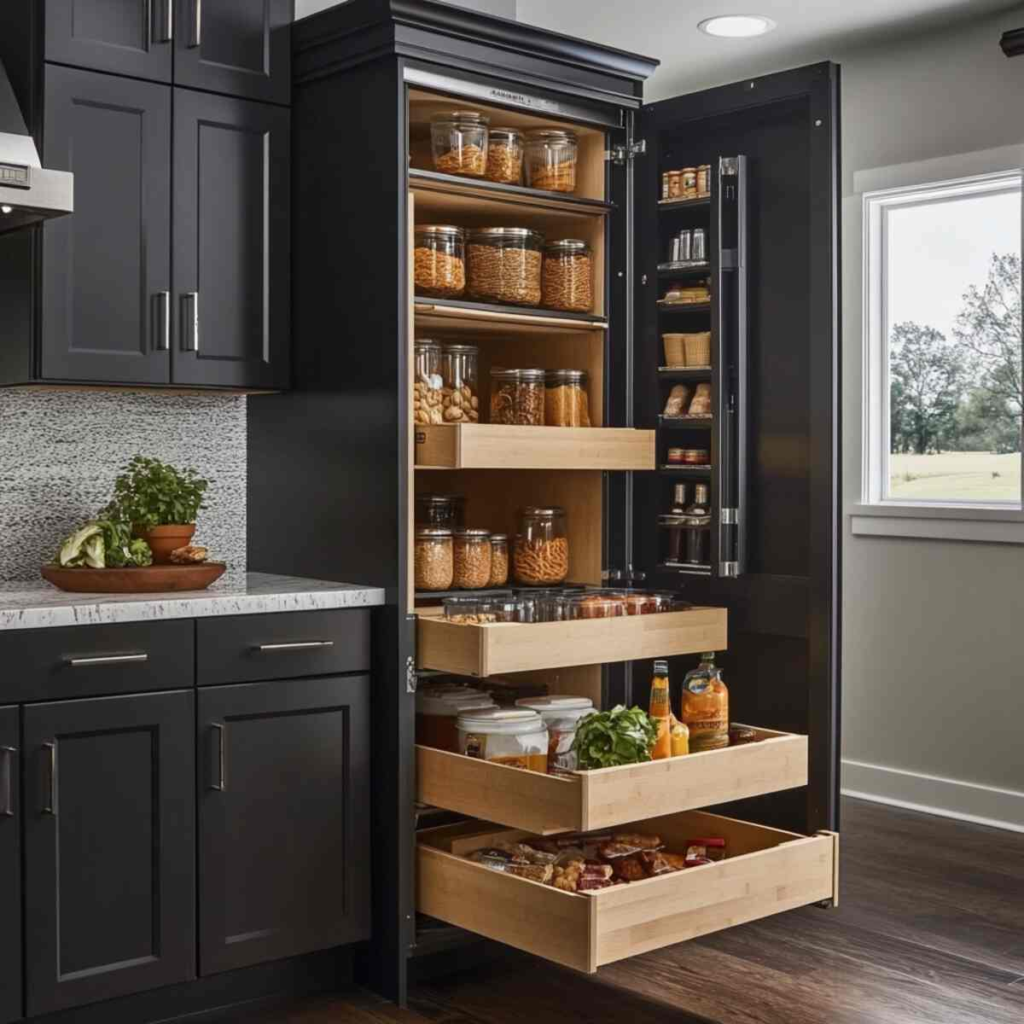
Why Pull Out Shelves for Pantry Spaces Are a Game-Changer
Most standard pantry cabinets were designed decades ago, with fixed shelves that assume you’re storing a handful of items and can easily see everything at a glance. Modern households are different — we stock more, we cook more variety, and we need smarter storage to keep up. Fixed shelves waste somewhere between 30–50% of usable cabinet depth because you simply can’t reach what’s in the back without removing everything in front.
Pull out drawers for pantry cabinets solve this at the root. When the entire shelf slides out toward you, every item is instantly visible and reachable. According to a 2022 survey by the National Kitchen and Bath Association, homeowners who added pantry drawers or roll-out shelving reported a 40% improvement in how organized their kitchen storage felt — and nearly 70% said it reduced the amount of food they wasted due to forgotten or expired products.
Beyond function, there’s a real quality-of-life difference. Imagine loading groceries and actually being able to put things where they belong without a reshuffling game. Sliding pantry shelves bring that ease to your daily routine, and when you build them yourself, you get to tailor every dimension to your exact cabinet measurements.
The Real Cost of Doing Nothing
Some homeowners put off pantry upgrades thinking it’s not worth the hassle. But consider what fixed shelves are quietly costing you. The USDA estimates that the average American household throws away roughly $1,500 in food annually — and a significant portion of that is buried in the back of cabinets. Installing pull out pantry drawers effectively pays for itself, often within a year, just in reduced food waste alone.
And if you’re thinking about resale value? Kitchen organization upgrades, including pantry pull out shelves, are consistently cited by real estate agents as low-cost improvements with strong buyer appeal. Buyers love functional storage — it’s one of those improvements that shows up beautifully during showings.
Types of Pull Out Pantry Shelves: Choosing the Right Style
Before you buy a single piece of hardware, it’s worth understanding the different approaches available. The right style depends on your cabinet type, how much you want to DIY, and your budget.
Slide Out Shelves (Classic Roll-Out)
The most common type, slide out shelves sit on a fixed frame inside the cabinet and pull forward on drawer slides. They look like open trays and work brilliantly for canned goods, boxed items, and anything with consistent height. You can build these from plywood, use a pre-made pantry insert kit, or buy a ready-to-install unit — sometimes called a diy rev a shelf setup when you install it yourself.
Pull Out Drawers for Pantry Cabinets
Pull out drawers for pantry spaces are similar to slide-out shelves but with enclosed sides, front, and back — essentially a box on slides. These are great for small loose items, snacks, baking supplies, or anything that might roll around on an open shelf. Pantry drawers are slightly more work to build but offer better containment and a cleaner look.
Pantry Roll Out Shelves
Pantry roll out shelves typically refer to full-width units that span the entire interior of the cabinet, supported on heavy-duty slides mounted to both side walls. These are the most stable option and best for heavy items. Building roll out pantry shelves requires more precise measuring but delivers the most satisfying result.
Sliding Pantry Cabinet Systems
For those with a full pantry closet rather than a cabinet, a sliding pantry cabinet approach makes sense — essentially building a full internal frame with multiple tiers of slide out pantry shelves, all on a common track system. This is the most involved build, but it transforms a basic closet into a showpiece pantry with pantry pull out shelving on every level.
Quick Comparison: Pull Out Pantry Shelves at a Glance
| Metric | Value |
| Avg. DIY Material Cost | $30–$80 per shelf |
| Build Time per Shelf | 2–4 hours |
| Skill Level | Beginner to Intermediate |
| Best Cabinet Depth | 12–24 inches |
| Food Waste Reduction | Up to 40% |
| Home Value Impact | Positive ROI |
Tools and Materials You’ll Need for DIY Pull Out Pantry Shelves
The beauty of a pull out pantry shelves diy project is that the materials list is short and affordable. Here’s what you’ll need for a standard single-shelf build.
Essential Tools
- Tape measure and pencil
- Circular saw or table saw (for cutting plywood)
- Drill and drill bits
- Countersink bit
- Level
- Screwdriver (manual or power)
- Clamps (helpful but not mandatory)
- Safety glasses and hearing protection
Materials for Each Pull Out Shelf
- 3/4″ plywood (birch or cabinet-grade) — for the shelf base and sides
- Pantry drawer slides — full-extension, soft-close recommended (16″–22″ length)
- 1×2 or 1×3 pine boards — for the mounting frame
- Wood screws (1-1/4″ and 2″)
- Wood glue
- Sandpaper (120 and 220 grit)
- Optional: paint, stain, or poly finish
- Optional: edge banding for a cleaner look
| ⚠️ Slide Selection Matters: Cheap slides are the #1 reason DIY pull-out shelves fail. Invest in quality ball-bearing, full-extension pantry drawer slides rated for at least 75 lbs per pair. Side-mount slides are easiest for beginners. |
Choosing the Right Drawer Slides for Your Pantry
| Slide Type | Best For | Difficulty | Cost |
| Side-mount ball bearing | Most DIY builds, heavy loads | Beginner | $15–$35/pair |
| Undermount soft-close | Clean look, lighter loads | Intermediate | $30–$60/pair |
| Center-mount | Lightweight trays only | Beginner | $8–$15/pair |
| European-style epoxy | Damp/humid environments | Beginner | $12–$25/pair |
For most diy pull out shelves for pantry projects, side-mount full-extension ball-bearing slides in the 18″–22″ range hit the sweet spot of affordability, ease of installation, and longevity.
How to Build DIY Pull Out Pantry Shelves: Step-by-Step
This guide walks you through the most versatile method — building a framed slide out pantry organizer that fits inside an existing cabinet without any permanent modification. It works for base cabinets, tall pantries, and even pantry closets.
| Step 1 — Measure Your Cabinet Interior Measure twice, cut once. With pull out drawers for pantry projects, precise measurements are everything. Record the interior width, depth, and height. For shelf width, subtract the combined thickness of both drawer slides (usually 1″ total) from your interior cabinet width. Your shelf depth should be 1″–2″ shorter than cabinet depth so it doesn’t hit the door. |
| Step 2 — Build the Outer Frame The outer frame mounts to the cabinet walls and holds the slide tracks. Cut two pieces of 1×3 pine to the full depth of the cabinet interior. Cut two more for front and back cross-supports. Assemble into a rectangle using wood glue and 2″ screws. This is the foundation for your pull out pantry shelf system. |
| Step 3 — Cut and Assemble the Shelf Box Cut your 3/4″ plywood to the calculated width and depth. For enclosed pantry drawers diy style, cut side pieces 3″–4″ tall and a matching front and back. Assemble with wood glue and 1-1/4″ countersunk screws. Sand all edges smooth. |
| Step 4 — Attach the Pantry Drawer Slides Separate your pantry drawer slides into cabinet-mount and shelf-mount portions. Mount the cabinet-mount portion to the inside of your outer frame. Attach the shelf-mount portions to the outside of the shelf box, ensuring they’re perfectly level. This is where the pantry pull out hardware lives, so take your time here. |
| Step 5 — Install the Frame in Your Cabinet Slide the outer frame into your cabinet, centering it carefully. Use a level to confirm it’s square. Fasten through the frame sides into the cabinet walls using 2″ screws or L-brackets for added strength. |
| Step 6 — Test, Adjust, and Finish Slide the shelf box onto the installed tracks. It should glide smoothly and fully extend with minimal effort. Check for any rocking — this usually means one slide is slightly higher than the other. Once the action is smooth, add your finish and load it up. Your diy pull out pantry upgrade is complete! |
| 💡 Pro Tip: Add a 1/4″ hardboard bottom to your shelf box for a smooth, cleanable surface. It also stiffens the assembly significantly, which matters when you’re loading it with heavy canned goods. |
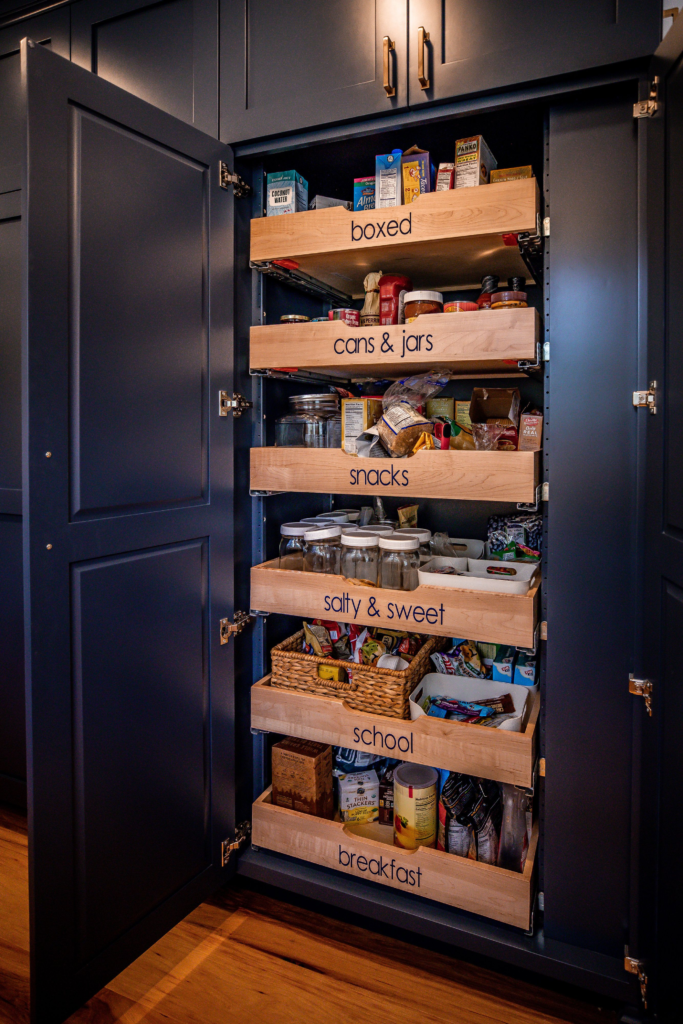
Advanced Build: DIY Pull Out Pantry Cabinet from Scratch
If you’re working with a pantry closet or an open alcove rather than a built-in cabinet, you may want to build a full diy pull out pantry cabinet — essentially a freestanding or built-in unit with multiple tiers of pantry roll out shelves.
Planning Your Custom Pull Out Pantry
Start with a scale drawing of your space. Decide how many tiers you want and what heights make sense for different product categories. A well-designed pantry with pull out drawers at the base and roll out pantry shelves in the middle gives you the best of both worlds. The drawers at the bottom are excellent for heavy items while the mid-level slides work perfectly for everyday pantry staples.
Building the Cabinet Carcass
Use 3/4″ plywood for all structural panels. Cut the top, bottom, and two side panels to your planned dimensions. Assemble using wood glue, pocket screws, and construction adhesive. Add a 1/4″ plywood back panel for structural stability. Install fixed shelf cleats at your desired heights to support each tier of slide out drawers for pantry use.
Adding the Pantry Pull Out Shelving Tiers
Each tier follows the same method as described in the basic build above. Build an outer frame, mount the pantry slide out shelves hardware, build the shelf or drawer box, and assemble. The key with a multi-tier build is keeping all tracks perfectly level relative to each other.
Converting an Existing Pantry to Pull Out Shelves
Have a pantry with fixed shelves you want to convert? Remove the old shelves, then install your frames and slides as described above. This is one of the most satisfying transformations — a dated, frustrating pantry becomes a highly functional pantry with pull out shelves with just a weekend of work.
Organization Ideas for Pantry with Pull Out Drawers and Shelves
Building the hardware is only half the equation. How you organize your new sliding pantry drawers and shelves determines how well the whole system works for your household.
Zone Your Pantry by Use Frequency
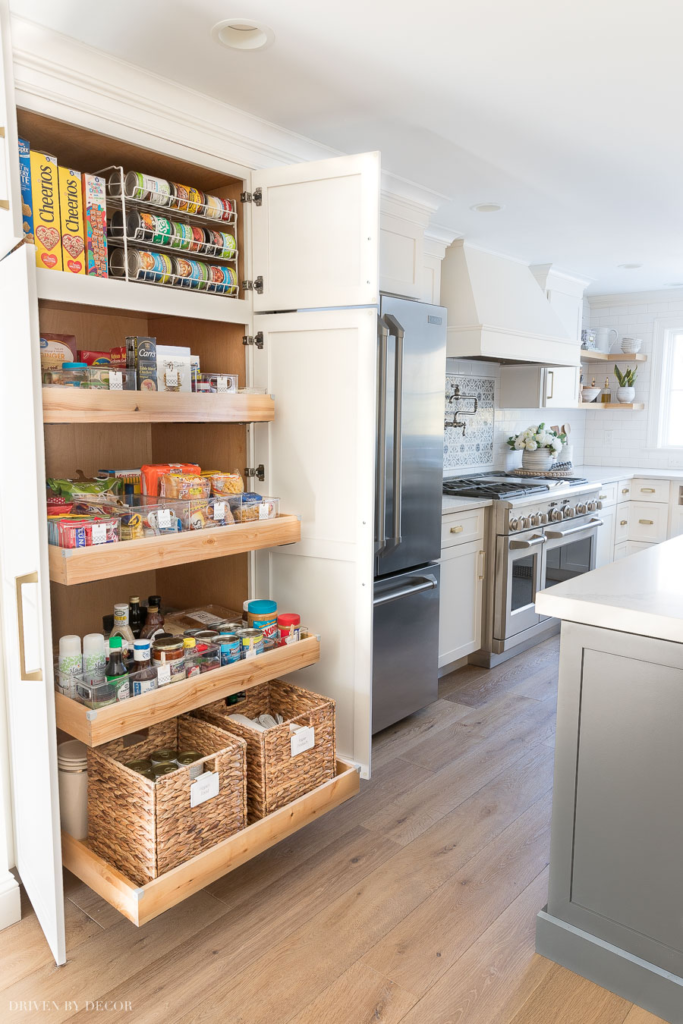
The most ergonomic setup puts your most-used items at waist to eye level. Reserve the lower pantry pull out drawers for bulk items. Put daily staples on the mid-level pantry roll out drawers. Use upper fixed shelves for rarely used items.
Category-Based Drawer Assignment
- Baking shelf: flour, sugar, baking powder, extracts, chocolate chips
- Canned goods shelf: tomatoes, beans, soups, broths
- Snack drawer: chips, crackers, nuts, granola bars
- Breakfast shelf: cereals, oats, pancake mix, nut butters
- Pasta & grains shelf: pasta, rice, quinoa, couscous, lentils
- Spice drawer: small jars and packets, grouped by cuisine type
Pantry Storage Pull Out Drawers for Small Items
Loose small items — spice packets, sauce packets, small cans — benefit most from enclosed pantry storage pull out drawers with taller sides. Adding simple dividers inside the drawer multiplies the organizational impact dramatically.
Maximize Vertical Space
One underrated aspect of pantry shelves with drawers systems is the ability to adjust tier heights after installation. Eliminating wasted vertical space can often add an entire extra tier to your pantry with pull out shelves setup.
Common Mistakes to Avoid with DIY Sliding Pantry Shelves
Mistake 1 — Not Accounting for the Door Swing
On a standard cabinet, your pull out shelf pantry extends toward the door. If you build the shelf too long, it will hit the door before fully extending. Always leave at least 1″ of clearance between the fully-extended shelf and the interior of the closed door.
Mistake 2 — Using Undersized Slides
Pantry shelves get loaded with heavy cans and bottles. Using cheap or undersized pantry cabinet drawer slides leads to sag, sticking, and eventual failure. Always choose slides rated for at least 75 lbs, ideally 100 lbs for pantry use.
Mistake 3 — Skipping the Dry Fit
Always dry-fit (assemble without permanent fasteners) before committing to screws or glue. This is where you’ll catch misalignments and clearance issues before they become permanent problems.
Mistake 4 — Building Without a Level
Un-level tracks cause shelves to creep to one side when loaded, straining the slides and causing binding. A few minutes with a level during installation saves hours of frustration later.
Mistake 5 — Ignoring Finish
Raw plywood absorbs moisture, stains, and food odors. Even a single coat of polyurethane makes your roll out drawers for pantry dramatically easier to clean and more durable over time.
Frequently Asked Questions
How much does it cost to build DIY pull out pantry shelves?
The cost for a single diy pull out shelves build typically ranges from $30 to $80 depending on plywood quality and slide hardware. A full set of diy pantry drawers for a standard tall pantry cabinet (5–6 tiers) usually runs $150–$400 in materials — far less than the $800–$2,000+ quoted by custom cabinet companies for similar pantry inserts pull out systems.
What type of wood is best for DIY pantry pull out shelves?
3/4″ birch plywood is the gold standard for pantry cabinet pull out shelves. It’s dimensionally stable, lightweight, takes paint and stain beautifully, and holds screws well. Avoid OSB or particleboard for the shelf box — they swell when exposed to kitchen humidity.
How do I install pull out shelves in an existing pantry without removing the cabinet?
The outer-frame method described in this guide is specifically designed for retrofitting slide out shelves into existing cabinets without modification. Build a frame that fits inside the cabinet opening, attach the pantry drawer slides to the frame, and fasten to the cabinet walls using screws.
What are the best drawer slides for pantry pull out shelves?
For most pantry pull out drawers applications, full-extension side-mount ball-bearing slides from brands like Blum, Accuride, or Knape & Vogt are excellent choices. Look for 75–100 lbs weight rating, full extension, and soft-close function. These details make your sliding pantry shelves feel premium and operate smoothly for years.
Can I add pull out drawers to a pantry closet?
Absolutely. A pantry closet is one of the best candidates for a full diy pull out pantry cabinet system. You can build a freestanding unit or build directly into the closet walls. You can incorporate taller slide out pantry shelves, deeper pantry drawers, and even rolling carts at the base.
How do I make pull out shelves for a pantry that are safe for heavy items?
For pull out pantry shelves carrying heavy loads, use 3/4″ plywood, full-extension slides rated at 100 lbs or more per pair, and ensure the outer frame is fastened firmly to the cabinet walls. Adding a center support slide under the middle of wide shelves also dramatically reduces sag. Well-built pantry roll out shelves can safely hold 80–120 lbs without flexing.
What is the difference between pull out shelves and pull out drawers?
A pull out shelf pantry unit is an open tray on slides — no front panel, no enclosed sides. A pull out drawer for pantry has an enclosed box construction with sides, front, and back. Both use the same pantry drawer slides and installation process. Most complete pantry with pull out drawers systems use a mix of both styles.
Are there pre-made pull out pantry shelf kits worth buying?
Yes — products from Rev-A-Shelf, ShelfGenie, and IKEA offer quality pantry inserts and pre-assembled pantry pull out shelving kits. They’re typically $60–$150 per shelf, but save significant build time. Many homeowners do a hybrid — purchasing the slide hardware and building the shelf boxes themselves, sometimes called a diy rev a shelf style build.
How do I keep pull out pantry shelves from wobbling or tipping?
Wobble usually comes from un-level tracks, undersized slides, or an inadequately fastened outer frame. Recheck that your pantry cabinet drawer slides are level, ensure both slides are mounted at exactly the same height, and confirm the outer frame is securely screwed to the cabinet walls at both the front and back.
Conclusion
There’s something quietly satisfying about a pantry that actually works. When every shelf glides out smoothly, every item is visible and accessible, and nothing gets lost or forgotten in the back — daily cooking transforms from a frustrating scavenger hunt into something genuinely enjoyable. That’s the real payoff of pull out pantry shelves DIY builds, and it’s well within reach for anyone willing to invest a weekend and a modest amount of materials.
The fundamentals are straightforward: good measurements, quality pantry drawer slides, and sturdy construction. Whether you’re building a single slide out shelf for a base cabinet or a full diy pantry cabinet with drawers for a walk-in pantry closet, the same principles apply. Start with one shelf if the whole project feels overwhelming — you’ll find the process rewarding enough that you’ll want to keep going until the whole pantry is transformed.
Your pantry has been waiting for this upgrade. Now you have everything you need to make it happen. Grab that tape measure, plan your build, and get started — your future self will thank you.